 Massachusetts Workers Compensation Lawyers Blog


In Deon v. H &J, Inc., claimant was employed in a full-time capacity as a maintenance technician for employer from 2003 until 2009. A few years prior to working for employer, claimant injured her shoulders and neck. She filed for workers’ compensation and received a six percent permanent partial disability rating. The following year, dogs attacked claimant, and the injuries resulted in a seven percent permanent partial disability rating. This was not related to the current workers’ compensation lawsuit.
 A year later, when claimant was using a power auger to clear a kitchen sink drain in a hotel, her right glove became caught in the auger and crushed her wrist and hand. Doctors initially diagnosed claimant with a hand sprain and two finger sprains and bruises. She was eventually cleared to return to work full time, but her supervisor felt she was not physically capable of performing the work in the manner she could before the on-the-job injury.
Her doctor placed serious lifting restrictions on her work activities, and she was then terminated because employer did not have any jobs that worked with her medical restrictions. Doctors and vocational experts (VEs) could not concur on a disability rating, which varied between two percent and 85 percent. As our Boston workers’ compensation injury attorneys can explain, the process of establishing a disability rating is extremely complicated and requires a thorough understand of agency policy and relevant law.
Continue reading

 According to a recent news release from the United States Occupational Safety and Health Administration (
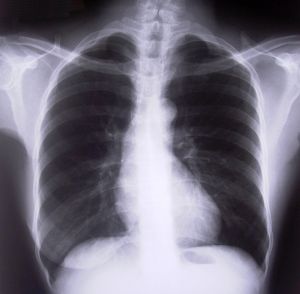
 X-rays of her hand were negative for physical injuries and a head CT scan showed no abnormalities. Her doctor stated that she had nearly fully recovered but recommended continued physical therapy. After completing physical therapy, she had made a significant recovery from her injuries, according to her PCP.
 Claimant slipped on a wet floor at the medical center and seriously injured her right leg, hip, lower back, and neck. She quickly applied for workers’ compensation benefits and was awarded around $580 per week as the maximum allowable benefit under a temporary total disability rating. This happened in 2006.
 He was diagnosed with malignant pleural mesothelioma at the end of 2005. He filed a products liability lawsuit against several asbestos manufacturers and gave a videotaped deposition in 2007. He died that year. Following his death, his wife filed a workers’ compensation claim against defendant.
 He was trying to check the oil on a machine known as a bakery loader after service had been performed on the equipment. He placed his head into the gearbox area to view the oil level, but the machine guards had not been reinstalled after being serviced. A gear arm rotated without warning and struck him in the head, trapping it between the gear arm and the metal frame.
 Claimant began working for employer in November of 2006. On a typical workday, claimant would see multiple patients in their respective homes. She drove her personal vehicle when going to see her clients. She would stop in the office to pick up supplies, read her mail, and attend company meetings.
 Claimant requested that employer pay for additional temporary total disability benefits and for an evaluation by a pain management specialist. Employer denied employee’s claim.
 Both claimant and employer stipulated that this was a work-related injury. Her doctor placed her on medical leave and recommended that she stop working for employer. Her doctor continued to treat her and concluded that she reached maximum medical improvement in March of 2009.