Hilda L. Solis with the U.S. Department of Labor recently made an announcement saying that about $12 million in federal funds was awarded through the Workforce Data Quality Initiative.

With the new initiative, 12 more states will be able to build or grow longitudinal databases of workforce data. This information will be linked to educational data to help to make workplaces safer, to help to reduce the risks of work accidents in Boston and elsewhere and to help to improve the performance of various workplace development programs.

It’s comprehensive programs like this that help to keep communication alive in the workplace and help to warn employers and employees about the risks for accidents on the job.
mfXibUs.jpg
Our Boston workers’ compensation lawyers understand that Massachusetts was one of the 12 states to be chosen to receive funds from this grant through this second round. The funding is going to help companies and workforces to create the means to provide policymakers, practitioners and consumers with info regarding the relationship between workforce development programs and education.

Those who have received the funds should be able to use the databases to conduct analysis and research that can be used to determine just how effective workforce and various education programs can be used.

The grants will be distributed through a three-year grant time. Throughout this time, there are a number of goals that officials with the Department of Labor intend on achieving:

-Creating and improving existing data systems.

-Improving the breadth and the quality of information and data in these kinds of systems.

-Using this information to help to provide information about various program operations.

-Analyzing the performance of employment training and education programs.

-Providing consumers with user-friendly info to help employers and employees to create the programs that best suit the needs of their workplace.

The states that were awarded this grant:

-Washington
-South Dakota
-Rhode Island
-Pennsylvania
-Oklahoma
-New Jersey
-Nebraska
-Michigan
-Illinois
-Idaho
-Hawaii
-Arkansas
In 2010, there were more than 2 million total recorded work-related injuries in the private industry throughout the United States. Of these reports, nearly 1 million of them required time away from work. In addition to these injuries, there were nearly 5,000 fatalities reports. Some of the top causes of work-related fatalities in the country were highway accidents, falls and homicides.

Some of the most common injuries sustained on the job by workers throughout the country include sprains, strains, tears, various injuries to the back and injuries resulting from fall-related accidents.

Employers have a responsibility to minimize the risks for accidents on the job. Safety should always be a number one priority at work. Safety and preparation help to keep workers safe!
Continue reading

As we recently reported on our Massachusetts Workers Compensation Lawyers Blog, the entire month of June is being dedicated to worker safety by the National Safety Council (NSC).
During this time, officials are working to educate employees about the risks they face on the job and they are also offering simple ways to help to reduce these kinds of risks. We recently discussed the importance of ergonomics.
mGmplFO.jpg
For the third week of the month-long campaign, we will be discussing the risks that are associated with slips, trips and falls as well as ways to prevent these kinds of accidents. This is an important topic to discuss through this campaign as falls are among some of the top causes of unintentional injury. These accidents account for nearly 10 million emergency room visits every year in the U.S.

Our Boston personal injury attorneys understand that fall-related accidents are completely preventable. Most people think fall accidents are the result of being clumsy or simply not paying attention, but the truth of the matter is that there are many factors that are involved in fall accidents. Some of these factors include your environment, your health condition and various age-related issues. Luckily, there are simple ways to help to reduce the risks for a slip, a trip or a fall in your home and in your work environment.

Simple Ways to Reduce the Risks of Fall Accidents:

-Make sure that floors are clear of clutter at all times.

-Make sure that all walking areas are well lit.

-Keep electrical cords out of walkways. If they need to be there, be sure to keep these cords secure.

-Consider putting non-skid rugs in slippery areas. Bathrooms are a common place for these items.

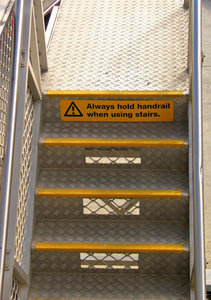
-On stairways and porches, consider installing handrails.

-Use a sturdy step stool when climbing or reaching for something up high.

-If you spill something on the ground, clean it up immediately.

-Make sure you wear non-slip, sensible footwear.

-You never want to stand on anything that has wheels, like a table or a chair.

-Make sure that your furniture is arranged so that there’s plenty of walk room.

-In outdoor walkways, be sure to clear fallen leaves, snow and other hazards.

-Remember that alcohol and medications can increase your risks for a fall. Many medications can alter a person’s balance. Know the side effects of your medications.

Chances are that you have a friend or someone in your family who has suffered a fall-related accident. Maybe you have experienced one of these accidents personally. Falls took the lives of about 25,000 people in 2009. Take the time to remove slip, trip and fall hazards to keep your family and your workplace safe.
Continue reading

As we recently reported on our Massachusetts Workers’ Compensation Blog, the entire month of June will be used to help to raise awareness about the risks of work accidents.

The National Safety Council (NSC) is organizing the month-long event, National Safety Month, and they’re also stepping up with some important tips to help you to stay safe on the job. Work safety should be a top priority of all employers, but there are things that employees can do to lessen their risks for an accident or for an injury.
n8ueahU.jpg
During the second week of the campaign, safety officials with the NSC are focusing on ergonomics. Through this week-long portion of the campaign, officials are working to educate employees on how to properly set up their work space to make it work with them not against them. By setting up an area that works for you, you can work more comfortably and reduce your risks for an accident.

Our Boston workers’ compensation lawyers understand that most employees are at risk for an ergonomic condition. Most commonly, you hear about these kinds of conditions happening to those who work in an office and at a desk all day. These conditions can affect virtually all parts of your body. Ergonomics is about learning how to work smarter and preventing conditions like overexertion. Did you know that close to 3.5 million people wind up in an emergency room every year because of overexertion? It’s true. Don’t let it happen to you and review the following tips to help to prevent one of these kinds of accident.

Ergonomics Tips:

-Make sure that you’ve got an adjustable chair at your desk. Make those adjustments frequently. Sitting in one spot for too long can hurt you.

-Be sure to give your eyes a break. Focus on something that’s at least 20 feet away periodically to rest your peepers.

-Get up and move around. Go for a walk, stand up and stretch, just get moving. You don’t want to sit still for too long.

-Make sure that your computer screen isn’t straining your eyes and your neck. Place the screen above your eyes slightly.

-Make sure that your wrists are in a comfortable and relaxed position when using the keyboard.

-Make sure that whatever you do most, whether it’s the computer or not, is placed right in front of you to minimize head and torso turning.

-Keep commonly used items near you to avoid reaching.

It’s important to remember that even with a properly set up work area, you can still get muscle fatigue from being in the same spot and in the same position for too long. Make sure to make frequent adjustments to your work space to keep it comfortable.
Continue reading

Interstate Electrical Services, an electrical contractor from North Billerica, was recently cited by officials with the Occupational Safety and Health Administration (OSHA) for a number of safety and health violations following an Andover work accident back in 2011.

In the flash blast accident, two employees who were an installing an electronic service were seriously injured. It happened when a piece of equipment that they were working with came into contact with a part of an electrical panel that was energized.
mfXlHNO.jpg
After the accident and after OSHA officials investigated the work site, it was determined that the electrical panel was not properly guarded to keep workers and other materials from coming into contact with it. Because it was not properly guarded, OSHA cited the company with a willful violation that came with a proposed fine of $70,000. This recent accident could have been prevented if employers would have taken the proper safety precautions.

Our Andover workers’ compensation lawyers understand that the company was fined because officials felt that the employers knew and voluntary disregarded the law’s requirements. Officials also felt that the company exercised complete indifference to employee health and safety. Employers are required to minimize any and all known risks on the job site. It’s a right we have as workers in the country and we all need to work together to make sure that these standards are upheld.

The contractor was also slapped with two additional serious violations. These two violations came with another $11,000 in proposed fines. These two were for having an electrical wire that wasn’t properly protected against damage and for additional electrical hazards posed by a power cord that had been damaged. A company is slapped with a serious violation when there is a high possibility that a worker could be seriously injured or killed by a hazard on the job that the employer should have known about.

“It is imperative for employers to ensure all necessary safeguards are in place and in use to prevent incidents like this from occurring,” said Jeffrey Erskine, OSHA’s Andover area director.

Employees who work with electrical current face some serious dangers on the job. Practically everyone is exposed to some sort of electrical energy each day during the performance of their daily work duties. For this reason, electrocutions happen to employees in a number of job categories and they happen all too often. Hardly anyone is safe. Oftentimes, employees don’t know about the potential for electrical hazards present in their work environment. This ignorance makes a worker even more vulnerable to the dangers. Most commonly, workers are electrocuted, suffer from electric shock, they’re burned or they fall because of contact with electrical energy.
Continue reading

The entire month of June has been designated as National Safety Month, according to the National Safety Council (NSC). From the 3rd through the 9th, the NSC is working to Promote Employee Wellness. Just as employers are required to make sure that work places are safe for employees, employees should focus on their own health and wellness.
mYBdE5U.jpg
Employers and employees can make small changes in the workplace to help to promote wellness and health and to reduce the risks of accidents and injuries on the job in Boston and elsewhere. Some of the changes that the NSC is promoting is by helping employees to increase their physical activity, to eat right and to quit smoking. If only these few changes were made, then about 80 percent of all cases of type 2 diabetes, stroke and heart disease could be prevented. To make it sound even better, about 40 percent of all cancer cases could be prevented, according to the World Health Organization.

Our Boston workers’ compensation attorneys understand that there are small changes that we can all make in our lives to help to improve our health and to help us stay safe on the job. Make sure that your fellow coworkers are working along with you to stay healthy. It’s a team effort and the month of June, National Safety Month, is a great time to spread the word.

Did you know that losing just 5 to 7 percent of your body fat can help you to significantly reduce your risks for diabetes? That’s only about 10 or 15 pounds on a 200 pound person. Another thing you can do is to reduce the sodium in your diet. It is recommended that you consume less than a teaspoon of salt a day. Lastly, residents are urged to get out there and get moving. Physical activity not only helps to keep your blood pressure stable, but it also helps to strengthen your heart and keep your stress level at bay.

Tips for healthy eating:

-Make half of your meal fruits and vegetables.

-Make sure that half of the grains that you consume are whole grains (brown rice, whole wheat bread, oatmeal).

-Choose fat-free or low-fat yogurt, cheese and milk.

-Choose lean sources of protein.

-Choose foods that are low in sodium.

-Keep an eye on your portions.

-Stay away from sugary drinks and sodas. Instead, opt for water.

Tips for staying active:

-Take a quick walk during your lunch break.

-Work outside in the yard.

-Go for a stroll on your bike after work.

-Consider joining an intramural sports league.

-Sign up for a local gym membership.

-Take a dip in the pool and swim some laps.
Continue reading

A recent trucking accident in Quincy took the life of an oil truck driver after his truck ended up pinning him against a wall.

The accident happened at the former Fore River shipyard as the worker was preparing to transfer fuel from his truck to a commuter boat, according to the Boston Globe. Accident reports indicate that the truck’s brakes failed and that’s what caused the truck to move.
26788_semi_mirror_2.jpg
There was a man inside the truck when the accident happened. He was able to get the truck into gear and move it to free the 42-year-old worker who was pinned. Unfortunately, after receiving CPR onsite from Quincy emergency response teams, the victim was taken to the Quincy Medical Center where he was later pronounced dead. The accident is still being investigated.

Our Quincy workers’ compensation attorneys understand that in some cases truck drivers are at no fault for an accident and it may be the fault of the company. Sometimes they happen because of faulty equipment. Just as in any other work environment, all employees are to be provided with the proper equipment and safety devices to complete the job safely and injury free. When your occupation involves driving a large truck or any other kind of motor vehicle, employers are required to make sure that these vehicles are in good working order, their parts are up to date and that everything is routinely checked.

There are a number of components that can contribute to an accident, including tires, hydraulics, brakes, locks, load straps, etc. These devices need to be routinely and thoroughly checked to make sure that they’re not putting employees at any unnecessary risks for an accident. Sometimes there can even be vehicles that come straight from the manufacturer with defective parts already installed on them. Still, companies are required to seek out the proper replacement or repairs for these vehicles. If a company knew about these defects and did nothing to correct them, the trucking company may ultimately be responsible for any injuries.

Determining fault in these cases is no easy task. Many times, the financial stakes are high and both trucking companies and truck manufacturers aren’t looking to dish out adequate compensation for the victim’s pain, suffering and losses. That’s where you need an experienced attorney.

You need an attorney who can undertake a complete and thorough analysis of the accident, of the equipment involved and of the individuals involved.

Make sure that your company is providing you with the proper equipment to get the job done. Make sure that this equipment is up to the proper safety standards and make sure that your employer is responsible for getting this done. Safety on the job shouldn’t be taken lightly. It should be one of the top concerns.
Continue reading

After a work accident in Middleton, an adhesives manufacturer is in some hot water with officials at the Occupational Safety and Health Administration (OSHA) but is working to make the proper changes to help to prevent any kinds of accidents in the future.

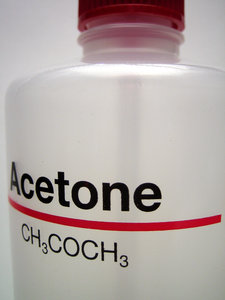
The company, Bostik Inc, has recently made a settlement with OSHA to help to resolve litigation following a number of citations and safety violations discovered by OSHA officials. The company faced a six-month investigation period following a 2011 work accident in which OSHA investigators discovered a number of safety violations at its Middleton facility. Specifically, the violations went against OSHA’s process safety management standard. This is a standard that is made up of a thorough set of requirements and procedures that companies and employers are required to follow to help to keep the work site free of hazards and dangers involving hazardous chemicals. In this particular case, the chemical in question was acetone. This chemical is used the company within its PSM standard-covered process, also known as direct solvation.
mWjRFXA.jpg
According to the recent settlement between Bostik and OSHA, Bostik pledges to take the proper safety and health actions to address deficiencies in its safety programs. Employers with the company have also pledged to look over and enhance its safety procedures. To make sure employers are doing their job, the agreement also requires the company to turn in proof of abatement to OSHA. The company was originally issued fines totaling nearly $920,000. The settlement came down to $600,000 in fines and the company has pledged to no longer use the direct solvation process at its facility in Middleton.

We told you about the initial work accident that caused this whole mess back in September on our Massachusetts Workers’ Compensation Lawyers Blog. Our workers’ compensation lawyers understand that these kinds of resolutions and corrections regarding work hazards need to be swift and corrective actions need to be taken immediately to help to reduce the risks of further injury and accidents.

Companies are required to make sure that work sites are safe for all employees. When chemicals are used on the work site, there are strict rules and regulations that need to be followed to help ensure the safety of everyone. Chemicals can produce serious, if not fatal injuries when they’re not properly handled, not properly labeled and not properly used.

“Just as important, the settlement commits Bostik to strengthening its PSM program to prevent the possibility of a similar incident in the future,” said OSHA’s local area director, Jeffrey A. Erskine.

In the initial accident, the explosion happened when a valve on a line transfer housing was left open. Because this was left open, vapors from the acetone were released. These vapors are in fact flammable and were determined to be the cause of the accident.
Continue reading

After a fatal work accident in Lancaster, officials with the Occupational Safety and Health Administration (OSHA) are cracking down on a packaging manufacturer, alleging it failed to ensure its workers safety on the job.

After OSHA officials conducted an inspection at he packaging company’s facilities, Horn Packaging Corp. was cited for a dozen safety and health violations. The fatal work accident happened back in November when an operator of a corrugated box-making machine became entangled in an unguarded drive shaft. These kinds of shafts and other dangerous machinery are required to be safeguarded to help to prevent accidents just like this one. Safeguards are a simple and safe move to help to keep workers safe on the job.
1078874_word_work_on_the_dices.jpg
“This case starkly shows the grave consequences from unguarded moving machine parts,” said Mary Hoye, OSHA’s local area director.

Our Lancaster workers’ compensation attorneys understand the importance of safeguards. The proper use of these devices have the ability to prevent the tragic and needless loss of an employees’ life. Arms can be crushed, fingers can be severed, loss of eye sight and even death can happen when machinery isn’t safeguarded. Safeguards are essential when protecting employees. A good rule to remember is that all machinery that has any part that could cause injury should be safeguarded. All hazards and dangers need to be controlled in all work sites, especially at sites with large, heavy machinery.

Packaging Corp. was handed one willful citation for not properly guarding shafts at its Lancaster work site. Employees were not provided with the proper protection to keep workers and their extremities from dangerous moving parts. Safeguards are a federal regulation for all machinery that can cause any kind of injury to a worker. OSHA officials hand out willful violations when a hazard or a danger is observed by officials and they believe that the employer knew of should have known about it. In this case, the lack of safeguards blatantly violated federal safety regulations.

In addition to the willful violation, Packaging Corp was given 11 serious violations, including:

-For failing to prevent other machine guarding dangers.

-For failing to create and enforce a written chemical hazard communication program.

-For failing to provide the proper training to all workers.

-For failing to cover electrical junction boxes.

-For having a number of deficiencies in the company’s hazardous energy control program.

A company is given a serious violation when officials observe a danger or a workplace hazard in which they feel that a serious injury or even death could result and that the employer already knew or should have known about it. Employers are required to point out dangers on the work site and to make the proper corrections to fix them.

According to OSHA, “Employers are responsible for providing a safe and healthful workplace for their employees. OSHA’s role is to assure the safety and health of America’s employees.”

With all of these citations, the company is facing more than $130,000 in proposed fines.
Continue reading

Slowly but surely, companies across the country are grasping the dangers of cell phone use behind the wheel. With each passing day, more and more companies are taking the proper safety precautions to help stop this dangerous behavior among employees and are working to help reduce the risks of work-related car accidents in Boston and elsewhere.
mm3LiqO.jpg
To help get more companies on board, the National Safety Council (NSC) recently released new recommendations and new example policies aimed at getting working drivers to hang up the phone behind the wheel. It’s not just handheld phones that are being targeted. It’s hands-free devices too. Organizations, companies and employers are urged to review the free NSC Cell Phone Policy Kit and are urged to enact some sort of safety regulations within their business to help to keep workers safe on the job.

Our Boston workers’ compensation attorneys understand that traffic accidents continue to be the number one cause of work-related fatalities in the county. Nearly 40 percent of work-related deaths are associated with motor vehicles, according to the Bureau of Labor Statistics. From 2003 to 2009, an average of 1,300 workers died each year as a result of traffic-related accidents on public highways. During this time, another 320 workers were killed in roadway accidents that happened off the highway or on industrial premises, according to the Centers for Disease Control and Prevention (CDC).

From 1998 to 2000, injuries resulting from these kinds of accidents, both on and off the job, were estimated to cost employers about $60 billion each year. On average, a fatal work accident cost a company about half a million in liability and direct costs. Injuries typically result in costs of nearly $75,000.

To help to reduce these types of accidents, the NSC has created a new Cell Phone Policy Kit for employer reference and use. The new kit reflects the current distracted driving trends and statistics. The kit can be used to help employers to create and enforce their own cell phone policy.

Included in the new Cell Phone Policy Kit:

-A letter from Janet Froetscher, NSC President and CEO.

-A letter from Deborah Hersman, NTSB Chairman.

-A list of popular FAQs regarding distracted driving and work-related accidents.

-A sample employee cell phone policy to help your company get started.

-Various posters and tip sheets to help to spread the word.

-A one year plan and roll out calendar.

-Various activities to help to get workers engaged and to help to communicate the dangers of distracted driving and cell phone use while driving.
Continue reading

There will soon be a Whistleblower Protection Advisory Committee, according to the Occupational Safety and Health Administration (OSHA).

This new committee will be in charge of advising, consulting and making recommendations to the Secretary of Labor on various ways to help to improve the effectiveness, efficiency and transparency of the administration’s whistleblower protections. Whistleblower services offer protection to workers who speak out about work-related hazards and dangers. All too often, employees are hesitant to speak out about dangers they observe on the work site. Many times they fear being let go or suffering some kind of punishment for speaking out. The truth of the matter is that any sort of retaliation against employees is unjust and illegal. Employees are urged to speak up about work hazards to help to reduce the risks of work-related accidents in Boston and elsewhere.
257897_whistle.jpg
“Workers who expose…workplace safety hazards have a legal right to speak out without fear of retaliation, and the laws that protect these whistleblowers also protect the health, safety and well-being of all Americans,” said Dr. David Michaels, assistant secretary of OSH.

Our Boston workers’ compensation attorneys understand that a federal advisory committee is an excellent way to strengthen protections for whistleblowers. It’s important for all kinds workers to feel comfortable speaking up about work-related dangers. These workers also need to be protected and should be encouraged to speak up about these kinds of concerns. Awareness is key in preventing work accidents. Retaliation, including being fired, being demoted, being passed over for a deserved promotion or any other sort of unfair treatment as a result of safety concerns is in fact illegal and can result in punishment and can require compensation to the victim.

What exactly will the Whistleblower Protection Advisory Committee do?

-Helps out OSHA officials with the development and implementation of improved customer service models.

-Helps to enhance the investigative and enforcement process, regulations, training and governing of OSHA investigations.

-Helps to advise OSHA in cooperative activities with various federal agencies. These federal agencies are responsible for issues that are covered by the whistleblower protection statutes that are currently enforced by OSHA.

Through the various whistleblower provisions that have been enacted by federal officials, companies are prohibited from making any kind of retaliating acts against those who speak out about safety concerns on the job. If you feel that you’ve been retaliated against under these conditions, you’re urged to contact an experienced attorney and to file a complaint under OSHA’s Whistleblower Protection Program.
Continue reading

Contact Information