If you are a civil service member who has been injured on the job in Boston, you may be confused about the benefits you are entitled to. Our experienced Boston workers’ compensation attorneys understand your confusion and we can help guide you through the process.
815332_fire_truck.jpg
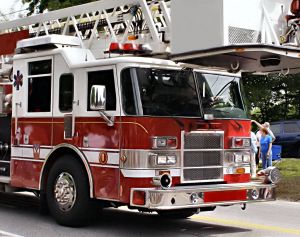
A recent case came out of Rhode Island dealing with the confusion surrounding workers’ compensation cases. Casale v. City of Cranston, No. 2010-162-Appeal (R.I. S.Ct. Apr. 4, 2012). This case involves a firefighter named James Casale (Casale or plaintiff) who was injured in a collision while he was driving to the site of an emergency. Plaintiff was employed as a firefighter and fire-truck driver for the City of Cranston (Cranston or city).

On the date of the collision the party who was at fault for the accident was driving his vehicle negligently and because of this negligence the plaintiff and the at-fault driver collided. This negligent driver was uninsured at the time of the collision.

Because of this accident, the plaintiff suffered severe injuries. Plaintiff was unable to perform his job related activities for a significant period of time. When a firefighter or civil service member is injured while on the job, the government employer is responsible for providing compensation. This compensation for injuries sustained while on the job is often referred to as injured-on-duty (IOD) benefits. Consistent with the state statutes governing IOD benefits, the city awarded plaintiff benefits greater than $50,000.

Although the plaintiff had received the benefits from the City, he proceeded to enter a claim with his insurance company (Amica) for uninsured motorist (UM) benefits. Consistent with the contractual duties of Amica, it paid the plaintiff the difference between the policy limit of $100,000 and the amount plaintiff received in IOD benefits from the city. This insurance claim is what caused the dispute between the city and the plaintiff.

UM is a type of coverage that is offered through your automobile insurance carrier. In many states this type of coverage is required, although that requirement is not in every state. When you purchase UM, your insurance company agrees to stand in the shoes of an at-fault uninsured driver who causes an accident with you. This is sometimes seen as a third-party liability because the insurance company is not a party to the collision.

Once the city discovered that the plaintiff received these UM benefits from Amica, the city argued that it was entitled to a reimbursement for the amount the city had paid in IOD benefits. The city looked to the state statute governing liability of third parties for damages. The purpose of this statute is to prevent an injured party from collecting double the amount of benefits. The city argued that the insurance company should stand in the shoes of the liable party and because of this; the city should not have had to pay IOD benefits.

Plaintiff countered this by arguing that he was not collecting double the benefits, in fact he only received the total of $100,000. Plaintiff had not collected double what he was entitled to because the insurance company decreased the amount of IOD benefits he had received from the UM policy limits.

The lower court originally heard this case and held on behalf of the plaintiff. The Rhode Island Supreme court upheld this lower court decision and because the plaintiff had not collected double the damages, the city was not entitled to reimbursement.

This case illustrates how critical it is to understand the benefits you are entitled to before you apply for benefits.
Continue reading

More than $170,000 in fines were recently issued to Bath Iron Works. The company in Maine was cited for a number of serious and repeat violations for neglecting to help to protect workers from an on-the-job accident in New England, according to the Occupational Safety and Health Administration (OSHA).
521304_attention.jpg
The recent safety and health inspection comes from OSHA’s Augusta office. The inspection was conducted as a part of the Administration’s Site-Specific Targeting Program and its local program that is currently being used to focus on the dangers that workers face in ship- and boat-building and repair work environments. The safety and health inspection discovered that the company allowed a number of electrical, mechanical and fall dangers, among other dangers.

Our Boston workers’ compensation lawyers understand that workers on this New England work site were not provided the proper fall protection and were working on roof edges that were unguarded. The roofs had openings and various holes posing serious and potentially fatal fall risks to employees. In addition to these fall hazards, the company’s work site was also cited for having various trip and fall dangers, obstructed walkways, under-trained employees, failing to keep flammable chemicals properly stored, exposing electrical sheathing, not inspecting equipment properly, etc.

Because of these safety and health citations, the company was fined nearly $94,000 in repeat violations and another $78,000 in serious violations. The serious violations come indicate there was a high probability that serious injury or even death could have resulted from these specific hazards in which an employer probably knew or should have known about. The other half of the safety and health citations, the repeat violations, are filed by inspectors when a company has already previously been cited for the same or a similar violation within the last five years.

“We’ve focused on this industry because establishments primarily engaged in ship- and boat-building and repair…have higher-than-average injury and illness rates,” said William Coffin, OSHA’s Maine area director.

This recent safety and health inspection was all a part of the Administration’s effort to encourage employees to enact and enforce a sustained, effective, proactive and ongoing safety campaign aimed at workplace dangers and making the changes to eliminate these hazards.

The New England company now has 15 business days from the date of the citations to either comply, meet with an OSHA director or completely appeal the findings.
Continue reading

Shawnlee Construction LLC has been cited by the Occupational Safety and Health Administration (OSHA) for neglecting to do its part to help to reduce the risks of work accidents in New England. The company, based out of Plainville, Massachusetts, is now facing roughly $50,000 in proposed fines. The fines come as a result of an OSHA inspection that determined employees faced fall risks of more than 11 feet. These fall risks could cost an employee their life if not fixed immediately and correctly.
mSeL02u.jpg
“The sizable fine proposed in this case reflects this employer’s history of fall protection violations, having been cited for similar hazards in three different states over the past five years,” said Paul Mangiafico, and area director for OSHA.

Our Boston workers’ compensation lawyers understand that fall accidents continue to be the number one cause of fatal work accidents for employees who work in the construction industry. In this most recent inspection from OSHA, workers were observed being just a small step away from what could be a life-changing and debilitating or fatal accident. These kinds of work-related accidents end the careers of hundreds of workers every year. To help keep these workers safe on construction sites in New England and elsewhere, it’s important that they’re provided with the proper fall protection and safeguards. These measures can mean the difference between life and death.

After Swanlee Construction LLC was inspected by OSHA, they received one repeat violation. This was the violation for failing to provide workers with fall protection. It was a repeat violation because the company had already been cited with this violation at least once in the last 5 years.

Workplace injuries and illnesses in Massachusetts in 2007, according to the Massachusetts Occupational Injuries and Illnesses Report:

-The most work-related injuries and illnesses were experienced by workers between the ages of 35- and 44-years-old.

-The health and education industry represented about 30 percent of all work-related injuries and illnesses.

-The most common work-related injuries resulted from overexertion (30 percent), contact with equipment/objects (25 percent) and falls (nearly 20 percent).

-The most commonly experienced work-related injury is a sprain or a strain.

-The construction industry had the highest rate for work-related accidents, at more than 6 per 100 workers.

-More than 40 percent of work-related injuries and illnesses required employees to take time away from work to recover.

-Most commonly, work-related injuries happen to the trust, or an employee’s shoulders or back.

According to a recent study conducted by the Massachusetts Department of Public Health:

-More than 70 percent of Hispanic workers who had been involved in a work-related accident had never heard of OSHA.

-Nearly 50 percent of White workers were unaware of workers compensation benefits.
Continue reading

Workers across the nation who work in the nursing and healthcare field are getting some help from the Occupational Safety and Health Administration (OSHA) to help to reduce the risks of work-related injuries in Boston and elsewhere.

OSHA recent announced the launch of its new National Emphasis Program (NAP) for these workers. The new program is going to help make sure that more inspections are conducted in these workplaces and that outreach programs are provided for safer work environments for a three-year period. Outreach programs will be used to help get all workers and employers on the same page and with safety as a top priority. This particular industry was chosen by OSHA officials because of the alarmingly high rate for work-related accidents and injuries.
mgyohUe.jpg
According to 2010 statistics from the U.S. Bureau of Labor Statistics, workers in the residential care and nursing industry had some of the highest injury rates and rates of days away from work. These rates are a direct result of on the job injuries and illnesses. The rates in this industry were more than 2 times higher than the rates of all private industry as a whole. This is alarming considering all of the controls available to address hazards in this industry. That’s why OSHAs stepping in, to help these workers to use their available resources and to help make workplaces safer for everyone involved.

Our Boston workers’ compensation attorneys understand that a large majority of the injuries and illnesses that were experienced in this industry were a result of slip, fall, trip and overexertion type accidents. When you combine these kinds of accidents, they accounted for nearly 65 percent of the cases in which employees were hurt so bad that they had to take time away from work in 2010.

Throughout this NEP safety program, officials with OSHA will be going after facilities around the country that had high rates for days-away-from-work. Officials will be targeting facilities with a days-away-from-work rate of 10 or higher per 100 full-time employees.

According to Dr. David Michaels, it’s important to remember that it’s these workers who spend day after day looking after us and our loved ones when we need help. There’s no reason that these workers should face such high injury risks.

Common Hazards Associated with the Nursing and Residential Care Industry:

-Dangers associated with exposure to blood.

-Risks associated with the exposure to dangerous materials.

-Exposure to dangerous diseases, like tuberculosis and others.

-Various ergonomic stressors related to moving patients.

-Slips, trips and falls.

-Workplace violence.

-Exposure to dangerous drugs and chemicals.
Continue reading

The Occupational Safety and Health Administration (OSHA) is continuing its fight against employee exposure to work-related physical and health hazards. OSHA recently announced its renewed partnership with the American Society of Safety Engineers (ASSE) to do just that and to help to reduce the risks of work accidents in Massachusetts and elsewhere.
1219097_untitled.jpg
The continued alliance between the two will proceed in addressing workers who cannot speak English or those who are just slightly fluent. The Alliance will also be addressing on-the-job motor vehicle safety, as well as working to raise awareness of work site safety and health for public sector employees.

Our Boston injury lawyers understand that the organizations renewed their Alliance for another two years, in which time they will continue working alongside ASSE’s Safety Professionals. Through this Alliance, the Latino Workforce group will be translating the Alliance-developed products for those who have difficulty understanding the current English versions. The two-year Alliance will also be promoting this year’s North American Occupational Safety and Health (NAOSH) Week. This year’s event will be taking place from May 6th through the 12th. “Safety, What Every Business Needs” is this year’s campaign theme.

“Our continued Alliance with ASSE will help ensure that workers are aware of on-the-job hazards and help reduce occupational illnesses and injuries,” said David Michaels, the Assistant Secretary of Labor for Occupational Safety and Health.

The ASSE was founded back in 1911 and currently represents nearly 35,000 environmental, health and safety practitioners around the world. All of these individuals are committed to helping to protect property, people and the environment.

Members of ASSE are involved in the design, safety engineering, standards development, education and management in almost every single industry, labor, governmental agency and institutions of higher education.

The two will be working with trade and professional organizations, unions, faith- and community-based organizations, consulates, businesses and educational institutions as well as faith- and community-based organizations to help to improve worker health and safety and to help to eliminate work-related illnesses, injuries and fatalities.

In 2010, there were more than 4,500 people who were killed on the job in the U.S., according to the U.S. Bureau of Labor Statistics. This is just about the same number of work-related fatalities that our country experienced in 2009, illustrating little change in workplace safety.

Economic factors in these kinds of incidents are common. As our economy continues to grow and more people head back to work, historical statistics warn us that we’re going to see an increase in the number of work-related accidents. For this reason, it’s more important than ever to keep an eye on workplace safety and to focus on hazard-eliminating practices.
Continue reading

According to the Executive Office of Labor and Workforce Development, the preliminary numbers for the month of January 2012 conclude that the state of Massachusetts added nearly 7,000 new jobs throughout the month. At last calculations, there were just about 3,218,500 jobs in the state of Massachusetts. The unemployment rate still sits at roughly 6.9 percent, which illustrates absolutely no change from the month before. While we’re still sitting at the same unemployment rate, we’re still sitting well below the national unemployment rate of 8.3 percent. That national rate is the lowest it’s been since 2008.
1209458_grapho.jpg
With the current unemployment rate, we’re still facing the same risks for work-related injuries in Massachusetts. When our unemployment rate drops and more people head back to work, we can expect higher accident risks. We need to start working on safety policies and on-the-job protection now!

Our Waltham workers compensation lawyers understand that we also saw 8,000 jobs added to the private sector in January of 2012. Seven out of the 10 private sectors illustrated gains with the largest in Professional, Scientific, and Business Services as well as Trade, Transportation, and Utilities.

Job Overview:

-Professional, Scientific, and Business Services were able to add nearly 4,000 jobs through the month of January.

-Trade, Transportation, and Utilities were able to add nearly 2,000 jobs throughout the month of January.

-Leisure and Hospitality was able to add more than 1,500 jobs throughout the month of January.

-Construction was able to add about 1,000 jobs over the month of January.

-Other Services were able to add about 1,000 job during January.

-Information was able to add about 700 jobs over the month of January.

-Financial Activities added nearly 500 new jobs in January.

-Education and Health Services lost more than 1,500 jobs during January.

-Manufacturing lost nearly 500 jobs in January.

-Mining and Logging lost about 100 jobs in January.

-Government lost nearly 1,500 jobs over the month of January.

While we are listing a lot of fields that were able to add jobs in the month of January, it’s important to remember all of the jobs that were lost in previous years. Still, this shows that the job market in Massachusetts is finally picking up where it left off.

As we said before, there were about 3,218,500 people who were employed during the month of January. That means that there were nearly 238,000 who were unemployed during the same time. This means that there was a total labor force of nearly 3,456,000.

Officials calculate the unemployment rate by taking monthly samples of random households. Job numbers are estimated through monthly samples from random employers.
Continue reading

Employees may now be better protected against chemical-related work accidents in Fitchburg and elsewhere. The Occupational Safety and Health Administration (OSHA) recently revised its Hazard Communication Standard. Now it’s aligned with the system that the United Nations’ uses to label these materials. The revisions of these standards could potentially save the lives of nearly 45 workers a year in addition to the more than $475 million it’s expected to bring in through enhanced productivity in the U.S. each year.
mWk5jYk.jpg

Our Massachusetts workers compensation lawyers understand that the new Hazard Communication Standard will help to improve the consistency, quality and clarity of the danger-related information that employees will receive. All of this new information will help to make it safer for employees to complete their jobs and will help employers to stay competitive in marketplaces around the world. It all starts with a little bit of understanding.

As we said, the Hazard Communication Standard is being revised to match the Globally Harmonized System of Classification and Labeling of Chemicals in the UN. The new Standard will be in full effect in 2016 and will help to reduce the confusion about the dangers of chemicals on the job, help to boost safety training as well as help to improve the understanding of hazards presented by chemicals, especially for low literacy workers. Under the new standard, chemicals will be classified according to their physical and health hazards. The new standard will also help to ensure that safety data sheets and labels are consistent for all chemicals that are produced in the U.S. as well as the ones that are imported.

In addition to the fatalities that the new standard is expected to prevent every year, it’s also expected to prevent nearly 500 illnesses and injuries annually. It’s also expected to reduce trade barriers and result in savings of more than $32 million to U.S. businesses that update labels and data sheets for dangerous chemicals.

Dr. David Michaels with the Occupational Safety and Health reminds the work force about the Hazard Communication Standard of 1983. That standard gave employers and employees the right to know about the risks associated with these dangerous chemicals. The newly-revised standard gives employers and employees the right to understand these same risks and dangers.

There were more than 400 workers killed because of harmful chemicals on the job in 2010, according to preliminary statistics from the Bureau of Labor Statistics. Officials with OSHA are hoping to significantly reduce this number by helping to better educate employees about the risks associated with dangerous chemicals. Chemicals are some of the most dangerous hazards that workers across the country are being exposed to on a daily basis. It’s important to keep workers educated about the risks associated with these materials to help to keep them safe on the job.
Continue reading

The MacMillin Co. Inc. was recently cited by inspectors with the Occupational Safety and Health Administration (OSHA) for failing to help ensure worker safety and for failing to protect employees from a work accident in New England. The worst thing about these citations is that the violations were discovered after an investigation that was warranted following a fatal work accident in September. The fatal work accident happened at the company’s construction site at Keene Middle School. What happened is that temporary workers were doing their jobs under the direction of the Keene-based contractor when a plank on the erecting scaffold they were working on snapped. One of the workers on that scaffold fell nearly 30 feet to the concrete floor below. He died from injuries sustained in the fall.
mf3MTqi.jpg
After the fatal accident, OSHA inspectors took a peek at the construction site and discovered that the scaffold hadn’t been previously inspected for defects, workers had not been provided with the proper training to be working with the equipment and the company didn’t make sure that the employees were provided with or were using proper fall protection equipment. With these willful violations, the company received three violations. A company is cited for these conditions when an employer is determined to have total disregard for federal safety requirements and fails to keep workers safe and healthy.

Our Massachusetts workers compensation lawyers understand that wasn’t all — the company was doing a lot more to jeopardize its workers’ safety. OSHA also determined that the scaffold planks that they were working on were not designed to support such heavy loads, the legs of the scaffolds were not set on base plants, the planks of the scaffolds were not covered with paint and the workers weren’t even being supervised when the scaffold was erected. These additional citations landed the company with four serious violations. Serious violations occur when there is a high probability for serious injury or death from a danger that an employer should have known about.

“Proper planning, inspection procedures, employee training and equipment could have prevented this incident and the worker’s death that resulted,” said Rosemarie Ohar, an OSHA area director.

Ohar adds that employers who use scaffolds in their duties should take the time and make the effort to look over and inspect their equipment, their employees’ training and the company’s work practices to help ensure that risks for accidents are minimized. These recommendations are in fact federal regulations and are designed to help protect workers throughout the U.S. It is a legal obligation to reduce dangers on work sites, regardless of the industry.

All of these violations and citations left the company with nearly $200,000 in proposed fines.

Nearly 2.5 million construction workers in the U.S. work on scaffolds. That’s nearly 70 percent of the construction industry. Scaffolding accidents kill nearly 100 workers and injure nearly 5,000 every year.
Continue reading

One company in Massachusetts is in some big trouble with the Occupational Safety and Health Administration (OSHA). According to OSHA, the company’s marble and granite fabrication operation was cited with more than 10 violations of the administration’s workplace safety standards, as well as for neglecting to reduce the risks of on-the-job accidents in Woburn. All of these violations come with proposed fines totaling nearly $48,000.
860780_saw_blade_5.jpg
International Stone Inc. was inspected by one of the OSHA Area Offices back in December after a complaint was filed regarding safety and work operations at one of the company’s facilities. OSHA inspectors witnessed workers polishing and cutting marble and granite on grinders that were not equipped with guards. Employees were also not wearing hand, face or eye protection. OSHA also concluded that the company was using electrical equipment and outlets that were unapproved and were being used in wet locations. The company was also noted for misusing extension cords, blocking access to circuit breakers, having illegible and worn out control buttons on its cranes, failing to eliminate trip and fall dangers, obstructing emergency exits and not properly marking exit doors.

Our Massachusetts workers compensation lawyers understand that these were all serious violations that were recorded by OSHA officials. These violations came with fines of nearly $40,000. Employers are required to provide safe and healthful work conditions for all employees. When companies fail to obey work safety rules, and OSHA finds out, companies typically find themselves in big trouble and ultimately will likely draw fines that could total into the tens of thousands of dollars. When a company is issued a serious violation, it means that employers should have known about the hazards and the risks for serious injury or even death that were found on the job.

International Stone Inc. was also cited by OSHA investigators with two repeat violations. This tacked on another $12,600 to the proposed fines. Included in these findings were violations that were extremely similar to the violations that were discovered back in 2008 when the company’s Marshfield location was inspected by OSHA. These violations were for failing to inspect cranes and the lifting hooks of these cranes in order to point out and fix potential defects. The second repeat violation was for using unapproved extension cords in wet areas.

“Left uncorrected, these conditions expose employees to the hazards of electrocution, lacerations, amputations, crushing by heavy objects, and eye and facial injuries,” said Robert Kowalski, an OSHA area director.

International Stone Inc. has 15 business days from the issue date of the citations to meet with their OSHA area directors, comply with the findings or contest them in front of the Independent Review Commission.
Continue reading

Did you know that your mind has the ability to reduce your risks of a work-related accident in Boston or wherever you may work? It’s true, according to a recent study from the University of Georgia. A newly-released study, “Perception and Work-Life Balance are Key Factors in Workplace Safety,” concludes that when workers’ perceive a positive safety climate, their risks for work-related injuries can decrease by more than 30 percent.

According to SafetyCommunity.com, the perception of safety climate breaks down a worker’s feelings toward the importance of safety in the workplace. We’re not saying that if you just “think” you’re safe then you’re going to be. We’re saying that actions taken by safety planners, manager and company owners can help to increase a worker’s trust in a company’s safety policies and can ultimately reduce their risks for a work accident.
misb0fk.jpg
“We’ve known for some time that certain occupations are more dangerous than others due to a variety of physical and other hazards,” said Dave DeJoy, University of Georgia professor of health promotion and behavior.

In the last 2 decades, there have been a number of studies that have concluded that organizational and management factors play a critical work in the risks for work-related accidents. These actions oftentimes play a huge role in the risks for on-the-job injuries. Our Massachusetts injury lawyers understand that there needs to be organizational and management actions taken frequently to continue to ensure that workplaces are safe for everyone. You see, we can create safety controls and procedures, but if they’re not continuously enforced and maintained, then that falls on management. To have a safe work environment for everyone, all parties need to work together at all times. Better team efforts toward safer workplaces help to increase workers’ perception of safety and help to increase physical safety.

Another important factor in the recent study from the University of Georgia was the contributions of family-related issues to work-related accidents. The study did in fact find that workers who were dealing with family interference at the job had higher rates of injury.

DeJoy says that many like to think that family and work are two different things. We’re finding out that’s not always the case. Researchers are concluding that the balance, or unbalance, of work, family and life has the ability to affect your work, whether it is positive or negative.

Regardless of what factors may or may not be involved in a worker’s personal life, it’s important to provide them with the safest work conditions possible while they’re on the job and earning a paycheck. It’s a federal requirement for employers to do so. The concerns for injury deserve to, and have a legal right to be, a top focus of employers.

“Injury is a failure of management,” said DeJoy. “Organizations who blame individuals for injuries do not create a positive safety climate.”
Continue reading

Contact Information