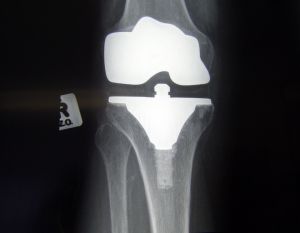
Stevens v. S.T. Servs., an appeal from the Minnesota Supreme Court, involved a claimant who began working at liquid storage facility in the late 1970s. In the mid-1980s, the claimant injured both shoulders and the year after his injury, his employer terminated his services.

1031747_hospital.jpgFor the next seven years after his termination, surgeons performed multiple operations on the claimant’s shoulders. During that period, the claimant applied for workers’ compensation benefits, and an administrative law judge (ALJ) awarded him benefits under a Temporary Total Disability (TTD) rating.

As your workers’ compensation lawyer can explain, a TTD rating is one of several classifications for benefits under a program administered by the Executive Office for Workforce Development for the Commonwealth of Massachusetts.

In Stevens, the parties entered into a settlement in the mid-1990s, whereby the claimant was to be awarded a disability rating of permanent and temporary total disability and found unfit for any type of employment.

Several years later, the claimant moved to Alaska and became a licensed plumber. He could not lift anything, but served as a consultant about plumbing issues. Eventually, he was offered a job as a consultant at a big box home improvement store, where he earned about $25 per hour.

He needed to return to Minnesota to undergo a medical procedure on his shoulders, and, when he was there, he had to meet with an investigator from the workers’ compensation insurance carrier. He disclosed his new job to the investigator. There was never any allegation that he attempted to commit any type of fraud with respect to his disability rating.
Continue reading

Most employers are required to carry workers’ compensation insurance under the law. Workers’ compensation is a program aimed at being a compromise between the needs of injured workers and employers. The program is designed so that workers with on-the-job injuries can get the financial compensation they deserve fast, while at the same time, protecting the employer from having to pay out large settlements that were not figured in their financial plans.

snowboard-jump-1149772-m.jpgThe workers’ compensation program was designed to cover not only medical bills, but also lost wages for workers who were injured on the job. In exchange for the ability to file a workers’ compensation claim, workers are precluded from filing a separate civil action in most situations. This is the benefit to the employer. In reality, many employers see a mandate to carry workers’ compensation coverage as a great compromise, and a few of them will do whatever they can to keeps costs down.

Our work injury lawyers understand how important it is to get your workers’ compensation benefits as soon as possible. Your family depends on your income and any unnecessary wait can be detrimental.
Continue reading

Our workplace injury attorneys understand that employers are interested in paying as little as possible for workers’ compensation insurance premiums.

brownenvelopemoneybribe3.jpgAccording to a recent article in the Columbus Dispatch, the State of Ohio settled a lawsuit that had been going on for years over allegations that hundreds of thousands of employers were being overcharged for workers’ compensation insurance premiums.

According to reports, the state agreed to create a $420 million fund to pay claims from employers who were overcharged for workers’ compensation premiums between 2009 and 2011. This was slightly less than half of the $860 million that the judge ordered the state to repay. The state initially appealed this order, and the Court of Appeals reduced the amount to $670 million. A settlement was reached, and both sides are reported as being happy with the settlement agreement.

Since this case began, there have been major changes made to the state’s workers’ compensation program, including improvements in accounting methods and additional efforts to reduce work place accidents.
Continue reading

Our workplace accident lawyers understand that employers may try to allege that their workers are independent contractors in order to avoid paying benefits.

constructionhatsmall.jpgIn Elms v. Renewal by Anderson, a case from the Maryland Court of Appeals, the court decided on issues pertaining to whether an injured worker was an employee of the defendant or an independent contractor.

According to the record, the plaintiff was a licensed home improvement contractor. He was the owner and operator of a home improvement business. Some of the services he provided were the installation and restoration of windows and doors and general carpentry.
In the years before doing with business with the defendant, the plaintiff maintained a workers’ compensation insurance policy for business. However, the plaintiff was never a beneficiary of the plan, nor was any of his other employees. The only one on the plan was the plaintiff’s son.
Continue reading

Our workplace injury lawyers understand that in some jobs, employers must work harder to prevent on-the-job injuries.

1380293_digger.jpgThe United States Occupational Safety and Health Administration (OSHA) is increasing efforts to keep demolition employees safe on the job. While demolition is generally considered an inherently dangerous occupation, there are number of workplace injuries and deaths that OSHA says could be prevented with proper training and concern for workers’ safety.

One of the major causes of these workplace injuries comes from having workers demolish a building without first conducting an engineering survey to gain a full understanding of the condition of the structure. Without such a survey, demolition companies will not know how walls and other structures will respond to the demolition process. The unexpected collapse of adjacent structures is a major cause of injuries to workers.
Continue reading

Our work injury attorneys understand that cases where employers have not complied with requirements to obtain coverage may require additional litigation.

money-problems.jpgIn a recent article, the News Virginian is reporting a substantial increase in the penalties faced by employers who do not maintain workers’ compensation coverage from their employees.

Workers’ compensation insurance has often been presented as a compromise aimed at striking a fair balance between the needs of workers and the needs of employers. Under the workers’ compensation plan, an employee has a means to quickly obtain compensation for an on-the-job injury without the need to file a civil lawsuit against their employer.
Continue reading

Our workplace accident lawyers understand that sometimes clients may be able to file a civil lawsuit in addition to their workers’ compensation claim.

230578_hospital_6.jpgA story from 7 News Boston discusses a truly horrific rape and stabbing of a teacher while she was at work. This teacher was employed by the Department of Corrections in Arizona. She was teaching a class at a prison unit that houses sex offenders. The prison allegedly did not provide any guards for the protection of the teachers or issue the teachers any type of safety equipment.

After teaching a class, the teacher was raped and stabbed, according to reports. The alleged assailant has been charged with rape, kidnapping, assault and other charges. The victim has filed for workers’ compensation to compensate her for the physical and mental and pain she has suffered since her attack.
Continue reading

The American Society of Safety Engineers recently held a Safety 2014 conference. Among the issues discussed at the conference was the dramatic increase in the rate of obesity and the impact that a more obese workforce will have on workplace safety. human-jaws-434803-m.jpg

When workers are heavier, they face different types of risks on the job and are in greater danger of experiencing certain kinds of workplace injuries. With more than a third of the U.S. population currently classified as obese, employers need to account for the special needs of this large portion of the workplace. When a worker gets hurt on-the-job, the injured employee should consult with an experienced workers’ compensation lawyer for help.
Continue reading

Many employers throughout Boston are well aware of the requirements set by the Occupational Safety and Health Administration regarding fall protection equipment. Yet, falls remain a top cause of workplace injuries and deaths, especially in the construction field. One possible reason why falls often cause serious or even fatal injuries is because many employers’ fall protection plans do not go far enough. Employers need to not only take steps to prevent falls but also should have a plan in place for what happens after the fall. knocking-on-heavens-door-1387913-m.jpg

Recently, Safety BLR published a comprehensive article on the importance of having a rescue plan in place in case a fall occurs. A rescue plan could allow an employee to get more timely assistance so his injuries are less likely to be devastating or deadly. Those who do suffer falls can make a workers’ compensation claim with the help of a workplace accident lawyer, and employers can cut their costs for work-injury benefits by ensuring that workers get the most prompt treatment for injury.
Continue reading

Our workplace injury attorneys would like to take the opportunity to thank the many brave first responders and emergency personnel this Fourth of July weekend. While most Americans have the day off from work and are having a relaxing and enjoyable Fourth of July weekend, many emergency personnel and first responders will be out in force keeping all of us safe. Whether they are patrolling the highways, standing by at sporting events and fireworks displays, or performing any number of important tasks, they remain on the job.

fireworks12.jpgEach year, firefighters, police officers, ambulance drivers, EMTs, and paramedics, rank among the most dangerous occupations. Firefighters expose themselves to all kinds of risks every time they go out on a call. There are dangers related to driving to an emergency, smoke inhalation, and falling objects during fire rescue operations. For police, the most common cause of workplace injuries are vehicle collisions and being assaulted during an arrest. EMTs and paramedics are commonly injured in typical on-the-job situations, plus the many dangerous job tasks associated with helping patients. One particularly scary risk is contracting a blood borne illness from accidental needle sticks. Trying to restrain a patient in a moving ambulance to give an injection is no easy task.

While there is no doubt that these first responders know they are putting themselves at risk, as many of them have adopted the motto “so others may live,” when they are injured on the job, they deserve to receive fair and adequate workers’ compensation benefits. Unfortunately, securing adequate benefits can sometimes be a real problem. In Florida, for example, there is a two-year limit on workers’ compensation benefits for emergency personnel.
Continue reading

Contact Information