Articles Posted in Boston Work Accidents

According to My Fox Boston, a 32-year-old man died on Christmas Eve as a result of a tree trimming accident. The man died while performing commercial work at a private home after the limb of the tree he was working on gave way. The man tumbled fifteen feet to the ground below and the tree limb subsequently landed on him. Although he was taken to the hospital, the man was pronounced dead.

This tree trimming accident is a very important reminder that all workers are at risk of being injured when engaged in the dangerous task of trimming trees. Our Watertown workers’ compensation attorneys are concerned that damage from recent storms has made tree trimming even more dangerous and we urge every commercial arborist to exercise extreme caution when trimming trees. 1409813_untitled.jpg

Tips for Safe Tree Trimming
The need for tree trimming has risen due to several recent storms and homeowners are strongly advised to hire professionals for tree trimming to avoid the risk of serious injury. Workers who work as professional arborists or who work in the field of landscaping or maintenance all may be asked to trim trees over the winter.

For those who trim trees as part of their job, it is very important to take safety precautions to avoid being injured by a fall, by the tree limbs, by electrical wire near to the tree, or by the tools and saws used in the tree trimming process.

To help you stay safe, the Occupational Safety and Health Administration (OSHA) has provided a number of tree trimming trips. According to OSHA:

  • You should contact utility companies prior to starting work and request that they either ground, shield or de-energize power lines prior to tree trimming.
  • You should always make sure you leave at least minimum clearance when you are working around energized power lines in order to avoid getting too close.
  • You should avoid trimming trees in bad weather including snow and rain.
  • You should look carefully around your work area prior to beginning the process of trimming the trees and you should eliminate any potential hazards.
  • You should only use equipment that has been properly maintained and you should only use equipment that you have been fully trained to use.
  • You should wear safety goggles, a hard hat and other appropriate safety gear during the tree trimming.
  • You should always assess the direction that the tree is leaning and determine the felling direction prior to cutting the tree.
  • You should calculate carefully the amount of hinge wood to leave in order to guide the tree when it is falling.
  • You should carefully inspect the tree before climbing to make sure it is sufficiently stable.
  • You should put away your tools when climbing a tree so your hands are free and you should always remain alert and focused on a falling tree without looking away.

If workers follow these tips, hopefully another tree trimming accident can be avoided. Employers, too, should monitor and train their employees. If an employee is hurt while performing work on tree trimming as part of his job, then the employee may collect workers’ compensation from the employer.
Continue reading
Last month, our Quincy workers’ compensation lawyers discussed the Top 10 Work Accidents in 2012. These work accidents caused thousands of lives to be lost and resulted in as many as 15 workers per day going to work in the morning and not coming home safely at the end of their shift.

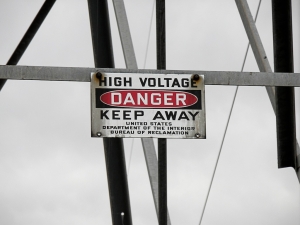
Understanding the top causes of workplace accidents is absolutely imperative in order to work towards better prevention efforts. To encourage employers to implement safety policies and to encourage workers to use extra caution to avoid some common risks, our workers’ compensation attorneys are discussing some of the top workplace accidents in greater detail. Today, we’ll be taking a look at the risks of electrical injury. 1406358_high_voltage.jpg

The Dangers of Electrocution and Electrical Burns at Work
Electrocution refers to death caused by an electrical shock. The body is a conductor of electricity and if you are exposed to too much electricity, it can stop your heart, damage your cells and cause serious burns. Unfortunately, despite the serious dangers associated with electrocution, employers still wracked up more than 1,330 violations of electrical safety requirements in 2012.

OSHA imposes a number of different requirements when it comes to electrical safety. In 29 CFR 1926.416(a)(1), for example, OSHA mandates that employees all must have appropriate protective gear when they are working near to any electrical power circuits.

Despite the OSHA regulations intended to keep workers safe, electrocution injuries happen all-too-often. These injuries can happen in a variety of different types of work settings but OSHA reports that there are certain common causes of electrocution at work. According to OSHA:

  • Workers suffer electrocution most often when working with overhead power lines. Coming into contact with electrical current from overhead lines accounted for 42% of workplace related deaths due to electrical exposure.
  • The second most common cause of electrocution in the workplace is the workers’ failure to properly de-energize electrical devices prior to starting work.
  • The third most common cause of workplace electrocutions is closely related to the second cause. In this case, workers don’t fail to properly de-energize the devices but they instead mistakenly come into contact with devices they thought were de-energized.
  • Workers coming into contact with these or other electrical sources need to be especially careful to avoid the risks presented by working closely with electricity. Workers also need to remember that any employee is technically vulnerable to suffering an electrical injury. In fact, a full 36 percent of non-fatal injuries related to electrical exposure at work resulted from contact with the electrical current feeding a tool or light fixture.

Both workers and employers, therefore, need to be aware of the dangers that can come with electrical exposure. Employers should have clear-cut safety guidelines and procedures in place, including guidelines about de-energizing electrical devices. Workers need to follow employer safety rules and also take extra care in situations where exposure to electrical current is a possibility.
Continue reading

On October 24, we wrote about the Top 10 Work Accidents in 2012. Problems faced by workers leading to accidents included a number of different health and safety violations, including inadequate fall protection, communication problems, inadequate respiratory protection and dangerous scaffolding, among other issues.

Understanding each of these workplace risks is essential for workers and employers. By taking a look at top causes of injuries, employers can institute policies and safety procedures to hopefully help to reduce the number of workplace deaths that are occurring. Likewise, workers can be aware of the dangers they face and exercise extra caution. 1326879_ladder_rungs_.jpg

To help both workers’ and employees better understand the risks in the workplace, our Quincy workers’ compensation lawyers will be taking a closer look at some of the top hazards workers face. Since there were close to 7,500 safety violations related to fall protection in 2012, we’ll start by taking a look at falls.

The Workplace Dangers of Falls
The Occupational Safety and Health Administration (OSHA) has a number of worker protection laws in place that are designed to make workplaces safer. Among the requirements set forth by OSHA are those found in 29 CFR 1926 Subpart M . This federal law imposes a requirement that employers provide a guardrail, safety net or personal fall arrest system when workers are in an environment where they could fall six feet or more.

Unfortunately, despite OSHA’s regulations, falls still occur frequently and are a major source of worker injuries. In fact, according to the 2011 Liberty Mutual Workplace Safety Index:

  • Falls onto the same level and falls onto a lower level were both on the top 10 list of disabling injuries in 2009.
  • Falls on the same level accounted for 15.8% of the workplace injuries that were considered disabling in 2009. Falls on the same level are situations where a worker trips or otherwise takes a tumble but does so without falling from a great height.
  • The costs of treatment and lost productivity for falls on the same level was equal to $7.94 billion in 2009.
  • Falls onto a lower level, such as falls from scaffolding to the ground or falls down a hole or embankment, accounted for 10.7 percent of disabling workplace injuries that workers suffered in 2009.
  • Falls onto a lower level resulted in costs of $5.35 billion in 2009.

These statistics reveal just how many workers are affected by falls in the workplace each year. While there may be nothing to do to prevent some of these falls, workers and employers can take a number of steps including:

  • Cleaning up all wet services immediately to avoid a potential slip-and-fall.
  • Keeping workplaces clean and free of debris and other items that could get in the way of a worker or increase the fall risk
  • Provide assistance in reaching items on high shelves or avoid storing items in areas where some workers have to strain to reach

Employers should also have safety policies and requirements in place related to fall protection gear in order to help workers to stay safe.
Continue reading

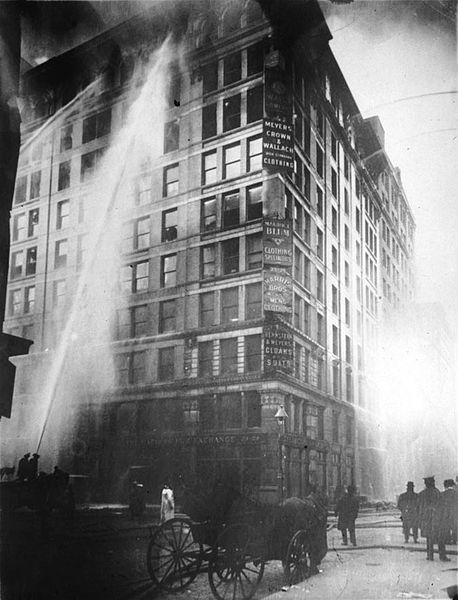
On March 25, 1911, a horrific tragedy occurred in New York City that resulted in the fourth highest number of deaths from an industrial accident in the history of the United States. This tragedy, which resulted in 146 workplace deaths, was called the Triangle Shirtwaist Fire and it was the catalyst that set in motion many worker protection efforts. Many of the worker protection laws in place today can be indirectly tied back to the tragedy of the Triangle Shirtwaist fire that occurred more than 100 years ago.

In today’s modern world where workers now have many legal rights, it may seem unthinkable that such a tragedy could occur again. Sadly, however, such a tragedy did happen recently. The only difference is, this tragedy happened in a clothing factory in Bangladesh. Image_of_Triangle_Shirtwaist_Factory_fire_on_March_25_-_1911.jpg

Our Quincy workers’ compensation lawyers want to make sure workers and employers are aware of the tragedy in Bangladesh that occurred this November. The fire in the clothing factory serves as an important reminder of how essential worker protection laws are in the United States and it illustrates the tragedies that can result when employers ignore the safety of their workers in favor of profits.

The Fire in Bangladesh
According to the Washington Post, a terrible fire broke out in late November in a Bangladesh clothing factory. The factory had no emergency exits and the doors to the factory were locked so the workers were unable to escape the building. As a result, nearly 100 workers died in the blaze and many were so badly burned that their bodies could not be identified.

The particulars of the fire, according to the Post, were very similar to those in the Triangle Shirtwaist Fire that jump-started the worker rights movement. In the Triangle Shirtwaist Fire, the doors to the factory were also kept locked in an effort to prevent break-ins and theft. The locked doors made it impossible for workers to get out, causing many to burn to death and others to jump to their death from the eighth, ninth and tenth floors where they were working.

Today, such a situation would hopefully not happen in America because workers are better protected and employers held accountable for their actions. The fire, however, was not simply one in a distant country operated by people far removed from the U.S. The factory supplies clothing to many retailers including Wal-Mart.

Although Wal-Mart has indicated that the factory had received a bad report for its fire safety provisions and was no longer authorized to make its clothing, the fact remains that a Wal-Mart label, Faded-Glory, was found at the fire site. Apparently, according to Wal-Mart, someone on its supply chain subcontracted to the factory.

Learning from the Tragedy
Regardless of the extent of Wal-Mart’s responsibility, the tragic fire in Bangladesh teaches many important lessons. The first is that worker protection laws and the focus on worker rights in the United States are absolutely essential. In foreign countries without worker protection laws, horror stories abound, including not just the tragic story of this most recent fire but also numerous other reports of terrible labor conditions including stories of the horrific working conditions in Apple factories in China.

In these foreign countries, many major U.S. corporations have shown that they will try to get away with providing poor treatment to workers unless the laws mandate otherwise. U.S. worker protection laws, therefore, need to be tightly enforced and any attempt to curtail those laws should be vigorously opposed.

Other lessons to take away from the tragic fire include a reminder to consumers that low prices can come at a very large cost. When doing business with companies, consumers have the power to stand up and say no to buying from those who exploit and endanger their workers.
Continue reading

On November 23, 2012, a natural gas explosion occurred in Springfield Massachusetts, a large city about 90 miles West of Boston. The explosion caused more than 20 injuries. Located in the entertainment district, 42 nearby buildings were damaged. Reports attribute the disaster to a natural gas worker who was responding to a report of a leak; however the gas company involved in the explosion indicated that the employee had followed proper protocol and procedure.

The explosion caused injury to firefighters, police officers, a city employee, gas workers and civilians. Our Boston workers’ compensation lawyers urge utility workers who are injured to understand their legal rights. This gas explosion illustrates the grave dangers that utility line workers face when called to respond to gas leaks. Workers injured in this recent explosion or other natural gas incidents need to be aware that their employers have certain obligations. 121124_springfield_explosion.jpg

The Risks of a Natural Gas Explosion
Natural gas is a highly combustible, flammable gas and workers who are called to respond to gas leaks face significant injury risks. The recent Springfield explosion illustrates clearly the devastation that can occur when there is a natural gas accident. One WDHD local news story reported that the explosion blew out windows within a three-block radius of the explosion, and that the force of the explosion caused irreparable damage to at least three buildings. According to the news article, a witness compared the devastation to the effects of a hurricane.

With such a volatile gas, utility companies need to take great precautions when workers are sent to work on gas lines. The utility company is alleging that precautions were taken and that protocol was followed. It illustrates the fact that an accident with a natural gas line disaster can happen at any time.

How the Accident Happened
On Monday morning, USA Today provided more insight into how the incident occurred. According to Columbia Gas Co., a utility worker had responded to calls of a gas leak. The worker followed older markings on a sidewalk that were supposed to indicate where the gas line was located. He was working an ordinary distance from where the line was supposed to be, based on the markings available, and he used a metal tool intended to locate the source of the leak.

Unfortunately, the markings did not correctly indicate where the gas line was located and the tool accidentally punctured the high-pressure gas pipeline. Because of the puncture, a flood of natural gas built up inside of a building where a strip club was located. The gas came into contact with an ignition source and and the blast occurred. The employee fortunately responded in a timely manner, ordering an evacuation of the building and potentially saving many lives.

The Rights of Workers Injured in a Natural Gas Explosion
This recent Springfield natural gas explosion reminds us that utility workers have a great risk of being in the danger zone of a natural gas explosion. With an aging infrastructure in many cities, these natural gas explosions may become an ever-more present risk.

Utility companies need to take precautions whenever possible to protect their workers and the lives of people living near gas lines. When an accident does occur, employers are responsible to employees for their losses and employees can make workers’ compensation claims to recover damages including full coverage for medical costs arising out of the explosion.
Continue reading

Hurricane Sandy came at New England full force.

Because of her wrath, airports in the area have canceled close to 20,000 flights. Hurricane Sandy slammed into a cold-weather system and dropped into the area bringing 80 mile per hour winds. Rain and snow even continued in some mountainous areas. More than three dozen people were killed, according to the Boston Globe.
nGbDSvW.jpg
When it all boils down, hurricanes are a kind of tropical cyclone that can do some serious damage to the communities they hit. They are storm systems that come with circulating air and sustained wind speeds of at least 74 miles per hour. Some of the toughest of hurricanes can come with speeds of more than 150 miles per hour. Areas that line the Atlantic Coast face some serious risks.

Our Boston workers’ compensation lawyers understand that the New England area is prone to these kinds of conditions. Hurricane season typically lasts from June through November. It’s important that residents in the area become familiar with the kinds of hurricane warnings we have, the hazards that accompany a hurricane as well as the precautions that both employees and employers should take once a hurricane has passed.

Once a hurricane has come and gone, work conditions change! In the wake of a hurricane, emergency response and recover employees can expect to face some serious challenges. Some of these challenges can include downed power lines, construction debris, downed trees and more.

Before heading out, employers need to look at the hazards and the risks that are involved in tasks that are specific to working in a hurricane-affected area. Once the area has been inspected, engineering controls and workplace practices need to be established.

Hurricane Recovery Safety Tips:

-Use hearing protection when working with chain saws and other loud equipment.

-Make sure all workers are properly trained in the recovery efforts they’ll be completing.

-Isolate unsafe areas with barriers and signage to restrict access.

-Make sure there’s a supply of clean water or disinfecting solutions in order to allow workers to practice personal hygiene.

-Inspect all tools before use to make sure they’re in working order.

-Avoid going near downed power lines, whether you think there’s power or not.

-Be cautious near water. Standing water can hide dangers and moving water can be dangerous for even the best of swimmers.

-Be cautious of insects and wildlife that may come with diseases.

-Air quality in questionable areas should be tested by a qualified individual.

-All debris should be disposed of in an approved manner.

-Extra care should be carried out to help to protect broken skin, like scrapes and cuts, to help to prevent disease transmission.

-Be cautious of moist or humid areas. This is a breeding ground for fungus and mold.
Continue reading

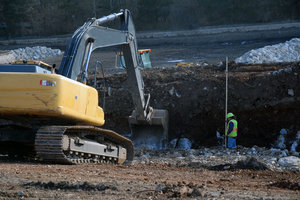
The Occupational Safety and Health Administration (OSHA) recently cited Newport Construction for various work hazards that were observed at a work site in Middlesex County. The Nashua contractor is now facing more than $30,000 in fines. These citations were handed over for various trenching dangers as cited by OSHA. This Massachusetts work site is located at the corner of Network Drive and Route 62 on the Burlington/Bedford border.
mMPYXc0.jpg
Safety and health inspectors with the Andover Area Office of OSHA happened to be driving by that intersection and job site, and saw workers working inside what appeared to be an excavation project that was not properly protected. With these allegations, an investigation was launched. The trench was deeper than 5 feet and was found to have been missing cave-in protection. This protection is federally required on trenches that are more than 5-feet deep.

Our Andover workers’ compensation lawyers understand that this wasn’t the first time for violations. They were repeat violations, meaning that the company had already been busted by OSHA officials for these same hazards. For the additional repeat violations, the company faces close to $30,000 in fines. These first violations were noted back in October of 2008 also at an Andover work site.

“An unguarded trench is an imminent danger situation,” said Jeffrey A. Erskine, an area director with OSHA.

Any time that a trench is unguarded, it can easily collapse and workers can be buried under tons of debris and soil before they ever realize what’s going on or have time to react or even attempt to escape.

A citation was issued to the company as a serious violation. This citation was written for neglecting to mark lifting slings with what should have been the maximum weight that the lift can safely carry. When workers don’t know what the weight limit is, they’re exposed to serious crushing dangers. When an employer gets a serious violation, it means that they should have known about the danger in the first place. It’s “serious” when there is a good chance that serious injury, or even death, could result from this danger.

The truth of the matter is that excavating is one of the most dangerous things to do in the construction industry. As a matter of fact, there is an average of two workers who are killed each and every month in trench collapses. Each worker in these situations should have the proper safety equipment and their work site should be laid out in a safe manner. Some of the most effective protective systems for trenches are to make sure that they’re sloped for stability, that they’re cut in a way to create a stepped benched grade, and that they are supported by a system that is made of material study enough to handle the weight. Each trench should have a trench box to make sure that workers are protected.
Continue reading

You’ve got to be comfortable on the job.

Proper ergonomics help to reduce the risks of work injuries. A comprehensive ergonomic plan can help to reduce the risks of employees developing and suffering from MSDs or even Musculoskeletal Disorders. Still, there are a number of workplace hazards that are overlooked by employers. Just take a stroll through your work area and you can probably identify some of these risks. When employers don’t step in and take responsibility for reducing these risks, our Boston workers’ compensation attorneys are asking workers to step in and to help one another to stay safe on the job.
npKbXVy.jpg
Keeping the office clean and orderly:

-Keeping a clean workplace might be one of the most important safety measures that you can take to help to reduce the risks of injuries on the job. These are two of the best ways to prevent fires, too. It’s important to keep all walking areas free of debris and other obstacles. Make sure that the trash is taken out every day and that materials are never packed too high to prevent tip-over accidents. Make sure drawers and cabinets are kept closed at all times and that the filter system for your workplace is clean at all times. There are small moves that you can make to help to minimize, or completely eliminate, the risks for accidents. Even the “safest” of workplaces can still have serious risks if you’re not on the ball.

-Make sure everyone is practicing good hygiene practices. Cold, the flu and even other diseases can easily spread to workers in an office when workers aren’t practicing good hygiene. Employees should always have the proper hand-washing stations equipped with bacterial soaps and single-use hand towels. Try posting these tips and regulations in an easily-seen area in the workplace.

-You want to keep up with the maintenenace on the job, too. Make sure that the office building itself is clear of hazards. Floors should be smooth, electrical problems should be sorted out and structural concerns should be taken care of immediately.

-You should make sure that all workers are properly trained in hazard awareness. This will help to make sure that any hazards that an employer may have missed is dealt with properly.

-One of the most common work accidents are the slip, trip and fall accidents. You want to make sure that everyone cleans up spills and slippery floors immediately. You should also consider posting signs in areas where water is known to accumulate. Be sure that all transitions between walking surface are smooth and are free of edges that could case a trip accident. You should also tuck away all loose cords that might be near the floor. Never string these cords through combustible materials either or underneath carpeting or rugs.
Continue reading

It’s National Preparedness Month and officials with the National Safety Council (NSC) have teamed up with Staples to make sure that small businesses have a plan and the resources to handle an emergency.

Now, employers can check out the Safety Research Center website at Staples.com for safety tips on how to handle common emergencies and every day safety issues. The website also provides small companies with a number of health and safety-related products and inforomation.
mgDyhZS.jpg
According to a recent survey conducted by Staples, about half of all office workers say that they’re not sure if an emergency plan even exists at their company or they say they know there’s no such plan in place.

Our Dedham workers’ compensation lawyers understand that preparation is key in preventing work-related accidents, injuries and fatalities. This includes having a plan for reacting to dangers and risks. Bob Risk, the Senior Strategic Safety, Health and Wellness Manager for Staples, says that it’s critical that all companies, and especially small companies, have a plan constructed and communicated to workers on how to handle emergency events. It’s also important that they have the right safety supplies on hand to help to make sure that everyone is protected. Unfortunately, this is oftentimes an area of workplace safety that is overlooked by employers. The truth of the matter is that you have to be ready for all kinds of dangers.

Each and every year, the federal government issues approximately 70 disaster declarations. This means that hundreds of communities, families and companies face an unexpected disruption and hardship each year. It’s important that we’re all ready for these disaster declarations and we can all effectively react if needed.

“Good preparation includes designing an emergency action plan,” said Janet Froetscher, the CEO and President of the NSC.

The Insurance Information Institute reports that close to 40 percent of companies that are affected by natural or man-made disasters never reopen their doors for business. To help the little guys, or our nation’s small business, officials are assisting with the creation of an effective preparedness plan:

-Make an emergency plan, including evacuation and preparations. Be sure to include phone numbers, those trained in first-aid, safe location head counts, etc.

-Create an emergency kit with basic survival needs. This should include flashlights, dust masks, batteries, radios, important documents, etc.

-Back up data on all computers.

-Practice and enforce these plans on a regular basis.

-Encourage workers to get training in emergency response training.

Make sure that your place of work is ready for all kinds of disasters. You don’t want to wait too long. It’s important to have these plans in place before a natural or man-made disaster hits.
Continue reading

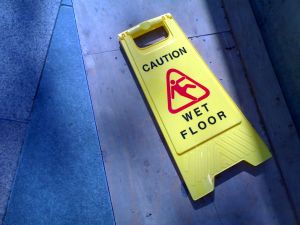
There’s close to $11 million that’s going to the Susan Harwood Training Grant Program. It’s a big present of safety from officials with the Occupational Safety and Health Administration (OSHA). This program is going to help to fund more than 70 not-for-profit organizations, including universities, colleges, management associations, employer associations, labor unions, and community groups.
1006453_caution_wet_floor-sign_1.jpg
What the Susan Harwood Training Grant Program does is provide education and training for employers and employees on the recognition, prevention and avoidance of safety and health dangers in their work areas. The program also works to educate workers about their rights on the job and what they can expect from their employer. Smaller companies and those who employ low-literacy workers in high-hazard industries are targeted through this effort. There has been close to 2 million workers who have gone through this program wince the late 1970s.

Our Boston workers compensation attorneys understand how critical it is for both employers and employees to be well-educated in safety practices on the job. Education and training are the number one preventative measures in working to prevent serious workplace accidents. With these new funds, workers and employers is some of our country’s most dangerous industries will receive the attention and the assistance they deserve to eliminate these kinds of dangers.

Through these programs, thousands of employees, companies and employers will be provided with one-of-a-kind hands-on, in-person training to deal with specific hazards to each industry. This information and knowledge will help to make a lifetime of change in improving workplace health and safety, says Dr. David Michaels, the Secretary of Labor.

The program was names after Susan Harwood as she was the previous director of Office of Risk Assessment. She passed away in 1996.

When it boils down, every single business, regardless of which industry it’s in, is required to provide workers with the safest working conditions possible. Work hazards can range from slippery floors to asbestos to excessive noise. This can be tougher to handle for smaller businesses. Luckily, there are government agencies that are formulated to regulate workplace safety also provides a wealth of resources to help small businesses comply with these specific regulations.

That’s why officials with OSHA have created the Consultation Services for the Employer program. Through this program employers and supervisors who are looking for help in making sure that their work areas are safe can get it from a free consultation service. These services are funded by OSHA.

If you’re able to point out the hazards that you may encounter on the job and you’re knowledgeable in ways to remedy them, then officials believe that you will more likely do so and you’ll be less likely to be injured on the job. When a safety consultant assists you in setting up or strengthening your workplace safety and health program, safety and health activities become routine considerations rather than crisis-oriented responses.
Continue reading

Contact Information