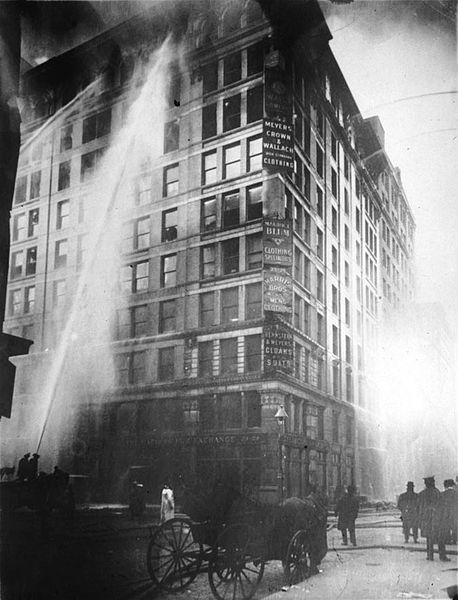
On March 25, 1911, a horrific tragedy occurred in New York City that resulted in the fourth highest number of deaths from an industrial accident in the history of the United States. This tragedy, which resulted in 146 workplace deaths, was called the Triangle Shirtwaist Fire and it was the catalyst that set in motion many worker protection efforts. Many of the worker protection laws in place today can be indirectly tied back to the tragedy of the Triangle Shirtwaist fire that occurred more than 100 years ago.

In today’s modern world where workers now have many legal rights, it may seem unthinkable that such a tragedy could occur again. Sadly, however, such a tragedy did happen recently. The only difference is, this tragedy happened in a clothing factory in Bangladesh. Image_of_Triangle_Shirtwaist_Factory_fire_on_March_25_-_1911.jpg

Our Quincy workers’ compensation lawyers want to make sure workers and employers are aware of the tragedy in Bangladesh that occurred this November. The fire in the clothing factory serves as an important reminder of how essential worker protection laws are in the United States and it illustrates the tragedies that can result when employers ignore the safety of their workers in favor of profits.

The Fire in Bangladesh
According to the Washington Post, a terrible fire broke out in late November in a Bangladesh clothing factory. The factory had no emergency exits and the doors to the factory were locked so the workers were unable to escape the building. As a result, nearly 100 workers died in the blaze and many were so badly burned that their bodies could not be identified.

The particulars of the fire, according to the Post, were very similar to those in the Triangle Shirtwaist Fire that jump-started the worker rights movement. In the Triangle Shirtwaist Fire, the doors to the factory were also kept locked in an effort to prevent break-ins and theft. The locked doors made it impossible for workers to get out, causing many to burn to death and others to jump to their death from the eighth, ninth and tenth floors where they were working.

Today, such a situation would hopefully not happen in America because workers are better protected and employers held accountable for their actions. The fire, however, was not simply one in a distant country operated by people far removed from the U.S. The factory supplies clothing to many retailers including Wal-Mart.

Although Wal-Mart has indicated that the factory had received a bad report for its fire safety provisions and was no longer authorized to make its clothing, the fact remains that a Wal-Mart label, Faded-Glory, was found at the fire site. Apparently, according to Wal-Mart, someone on its supply chain subcontracted to the factory.

Learning from the Tragedy
Regardless of the extent of Wal-Mart’s responsibility, the tragic fire in Bangladesh teaches many important lessons. The first is that worker protection laws and the focus on worker rights in the United States are absolutely essential. In foreign countries without worker protection laws, horror stories abound, including not just the tragic story of this most recent fire but also numerous other reports of terrible labor conditions including stories of the horrific working conditions in Apple factories in China.

In these foreign countries, many major U.S. corporations have shown that they will try to get away with providing poor treatment to workers unless the laws mandate otherwise. U.S. worker protection laws, therefore, need to be tightly enforced and any attempt to curtail those laws should be vigorously opposed.

Other lessons to take away from the tragic fire include a reminder to consumers that low prices can come at a very large cost. When doing business with companies, consumers have the power to stand up and say no to buying from those who exploit and endanger their workers.
Continue reading

On November 23, 2012, a natural gas explosion occurred in Springfield Massachusetts, a large city about 90 miles West of Boston. The explosion caused more than 20 injuries. Located in the entertainment district, 42 nearby buildings were damaged. Reports attribute the disaster to a natural gas worker who was responding to a report of a leak; however the gas company involved in the explosion indicated that the employee had followed proper protocol and procedure.

The explosion caused injury to firefighters, police officers, a city employee, gas workers and civilians. Our Boston workers’ compensation lawyers urge utility workers who are injured to understand their legal rights. This gas explosion illustrates the grave dangers that utility line workers face when called to respond to gas leaks. Workers injured in this recent explosion or other natural gas incidents need to be aware that their employers have certain obligations. 121124_springfield_explosion.jpg

The Risks of a Natural Gas Explosion
Natural gas is a highly combustible, flammable gas and workers who are called to respond to gas leaks face significant injury risks. The recent Springfield explosion illustrates clearly the devastation that can occur when there is a natural gas accident. One WDHD local news story reported that the explosion blew out windows within a three-block radius of the explosion, and that the force of the explosion caused irreparable damage to at least three buildings. According to the news article, a witness compared the devastation to the effects of a hurricane.

With such a volatile gas, utility companies need to take great precautions when workers are sent to work on gas lines. The utility company is alleging that precautions were taken and that protocol was followed. It illustrates the fact that an accident with a natural gas line disaster can happen at any time.

How the Accident Happened
On Monday morning, USA Today provided more insight into how the incident occurred. According to Columbia Gas Co., a utility worker had responded to calls of a gas leak. The worker followed older markings on a sidewalk that were supposed to indicate where the gas line was located. He was working an ordinary distance from where the line was supposed to be, based on the markings available, and he used a metal tool intended to locate the source of the leak.

Unfortunately, the markings did not correctly indicate where the gas line was located and the tool accidentally punctured the high-pressure gas pipeline. Because of the puncture, a flood of natural gas built up inside of a building where a strip club was located. The gas came into contact with an ignition source and and the blast occurred. The employee fortunately responded in a timely manner, ordering an evacuation of the building and potentially saving many lives.

The Rights of Workers Injured in a Natural Gas Explosion
This recent Springfield natural gas explosion reminds us that utility workers have a great risk of being in the danger zone of a natural gas explosion. With an aging infrastructure in many cities, these natural gas explosions may become an ever-more present risk.

Utility companies need to take precautions whenever possible to protect their workers and the lives of people living near gas lines. When an accident does occur, employers are responsible to employees for their losses and employees can make workers’ compensation claims to recover damages including full coverage for medical costs arising out of the explosion.
Continue reading

The people who help us get to and from where we’ve got to be oftentimes struggle with their sleep, according to the National Sleep Foundation.

In a recent study, the 2012 Sleep in America poll, transportation officials — including truck, taxi, bus, limo, train and plane operators — were talked to about their sleeping habits and their performance on the job. The results truly illustrate how overworked these individuals are and how their safety, and our safety, is in jeopardy because of it.
1034045_girl_in_bed.jpg
According to the study, train operators and pilots were most likely to report sleep-related safety and job performance problems. As a matter of fact, more than 25 percent of train conductors and about 23 percent of pilots report that sleepiness affects them on the job at least once a week. Only about one out of every 6 non-transportation workers reported any of these problems.

Our Dedham workers’ compensation lawyers understand that sleepiness also affects those driving to and from work. About 6 percent of train operators and pilots report that they’ve been in a car accident because of sleepiness while commuting to and from work. Only about 1 percent of all other workers report this same problem. It’s important that workers get the sleep that they need to function safely. A lack of sleep can result from long shifts, the time of the day a worker is scheduled and even from having little time between shifts.

Transportation professionals need to manage sleep to perform at their best,” says David Cloud, National Sleep Foundation CEO. “As individuals and employers, we need to know more about how sleep improves performance.”

Advice for Better Sleep:

-Make sure you’re going to sleep at the same time every day. You need to stay on a schedule so that your body gets used to when it’s sleep time and when it’s work time.

-Try not to oversleep. If you get too much sleep, you’ll actually wind up a lot more tired than before.

-Try to use bright light to manage your internal clock. Stay away from bright lights during the evening hours and make sure you’re getting sunlight in the morning.

-Try to only use your bedroom for sleep. This will help to strengthen the association between sleep and bed.

-Keep televisions, computers and other distracting things away from your bedroom. Your room is for sleeping. Keep distractions in the living room or in another room of the house.

-Compose a relaxing nighttime/bedtime ritual. Try taking a warm bath/shower or listen to classical or other calming music.

-Make sure your bedroom is quiet, cool and dark.

-Make sure your mattress and your pillows suit your liking.

-Try not to bring your worries into the bedroom. Keep your concerns in a “worry book” and save them for the daytime to address them.

-If you’re unable to fall asleep when it’s time, go do something relaxing in another room until you start to feel tired.
Continue reading

It’s that time of year again! The temps are dipping and the snow is on its way. This is when we see an increase in the risks for work accidents, injuries and fatalities for many workers throughout the state.

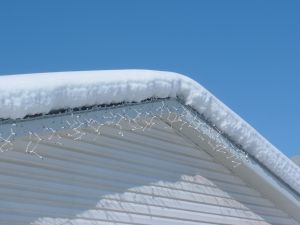
Each year, there are workers who are seriously injured or even killed while conducting snow/ice removal from on top of buildings, decks or other structures. Officials with the Occupational Safety and Health Administration (OSHA) looked into 16 serious injuries and fatalities over the last 10 years from these kinds of accidents. They concluded that all of these accidents could have been prevented!
986854_snow_and_ice_on_the_roof.jpg
Our Quincy workers’ compensation lawyers understand that there are many reasons why we have snow and ice removal crews. When you get too much ice or snow on top of a structure, you run the risk of overloading and even collapse. In many of these jobs, workers climb right onto the roof or deck to remove the snow. They use equipment like rakes, shovels, ladders and even snow blowers. There are even aerial lifts involved in some cases. These devices are used when workers apply de-icing materials. Either way, the employees who perform these duties face some serious risks of on-the-job injuries. Many of them don’t have the proper training to be completing these duties.

In recent years, injuries from these kinds of jobs have ranged from amputations to eyes injuries to various other injuries. Roofs can collapse. Tip-overs can result from improperly used aerial lifts. A worker can become entrapped and even suffocate when falling into snowpiles or under snow drifts. They run the risk of getting electrocuted and shocked when working near power lines and with extension cords. It’s cold out there so many of them run the risk of frostbite and there are even risks of musculoskeletal injuries that can result from overexertion.

Preventing Falls during Snow Removal:

-Try to use removal methods that don’t involve employees going on to roofs.

-Before starting a job, make sure you evaluate the loads exerted on roofs. Take into consideration the weight of the snow, the equipment being used and the workers.

-Make sure that all workers have the proper fall protection equipment.

-Make sure that all workers know how to properly use aerial lifts and ladders safely.

Consider asking a few questions before starting a job. Are there any hazards on the roof that might be hidden by the snow or the ice? Can the job be done without putting workers on the roof? Is it necessary for the snow to be removed? What kinds of tools are needed and are employees trained on how to properly use these tools? What kind of fall protection is needed? What training tools are needed to make sure that everyone works safely? How will you protect people on the ground from ice and snow falling off of the roof during the removal process?
Continue reading

A New England worker was flown to Massachusetts General Hospital after an industrial accident severed his fingers. According to the Morning Sentinel, the 23-year-old worker was employed at the Maine Pellet Co. when the accident happened just before 9:00 p.m. Full details of the injury have not yet been released, but the victim released a statement on his Facebook page:
mfBpzi4.jpg
“I cut all my fingers off on my right hand but fortunately I still have my thumb,” it said. “On my left hand, ring and middle finger is missing the tips. They basically cut my right hand all the way back to my knuckles.”

Our Boston workers’ compensation lawyers understand that officials with the Centers for Disease Control and Prevention (CDC) get about 200,000 reports of work accident-related amputations each year. From 1992 to 1999, there were more than 170 fatal amputations and more than 88,000 amputations that happened in America’s workplaces, according to the Bureau of Labor Statistics. Most of these kinds of accidents happen to manual laborers, fabricators, manufacturing, transportation officials, agriculture workers and operators. The truth of the matter is that everyone is at risk for one of these accidents.

Even though these kinds of injuries represent less than 1 percent of all workplace injuries and fatalities, the severity of such injuries oftentimes affect all parties involved more drastically than other kinds of work injuries. Because of the serious consequences of these accidents, they’ve gained more and more attention over the years.

About a third of these injuries require a worker to take at least 31 days off of work. In comparison, less than 20 percent of other injury accidents involve this time away. This should illustrate the serious nature of these injuries and the lengthy rehabilitation often required. In many cases, the victim will live with a disability for the rest of his life.

Amputations may be complete or they can be partial. When you undergo a complete amputation, the entire body part is removed. When there’s a partial amputation, some muscle, tissue or bone keeps the amputated body part connected to the body of the victim. Typically, guillotine amputations are a lot easier than crush amputations. In crush amputation, you’ve got to deal with more tissue, bone and muscle damage.

There’s also an avulsion amputation. This is when a body part is stretched or torn away from the body and the tissue. This kind of amputation involves some serious damage to soft tissue, blood vessels, bones and nerves.

The kind of amputation suffered in these kinds of accidents has a significant impact on the outcome of the injury and the possibility of reattaching the severed body part, as well as the future of your working abilities.
Continue reading

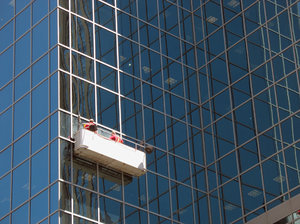
The Alliance between officials with the Occupational Safety and Health Administration (OSHA) and those with the International Window Cleaning Association (IWCA) aims to continue to reduce the risk of work accidents among window washers.

The renewed Alliance aims to address the dangers of slip, trip and fall accidents (especially from heights) as well as the safe use of common industry equipment, like scaffolds and ladders.
mWynm5Y.jpg
“Falls are among the most common causes of serious work-related injuries and deaths in the window cleaning industry,” said David Michaels, the Assistant Secretary of Labor for Occupational Safety and Health.

Our Boston workers’ compensation lawyers understand that training and education are two of the most effective ways to help to reduce the risks of on-the-job accidents, injuries and fatalities. It’s important that employers take the proper steps to ensure that employees are educated and properly trained in the work they’re required to complete, and that they’re provided with the proper safety equipment to do so.

The Alliance will continue for another two years. During this time, members of the Alliance will be developing education and training programs for those who clean windows, focusing on limited English-speaking workers and low-literacy workers. Members will be focusing on helping workers to recognize and prevent workplace accidents when cleaning windows and solar panels. Current safety materials and new materials will be translated so that these workers are able to better understand. It’s estimated that these workers account for about 50 percent of the window-cleaning industry.

The International Window Cleaning Association represents more than 600 national and international member companies. These companies employ over 10,000 workers.

Employees in the field are suggested to take a Hands-On Training Course with the IWCA.

Window cleaning safety is primarily focused on fall protection, as most of these workers work from heights. As a matter of fact, fall accidents are the most common cause of injury and death. Companies are required by federal law to make sure that work places are safe and are set up to prevent these kinds of accidents. OSHA requires that fall protection be provided for workers who perform at elevations of 4 feet in general industry workplaces, 5 feet in shipyards, 6 feet in the construction industry and 8 feet in longshoring operations. Window cleaners can oftentimes work at heights much greater than these.

Tips in Protecting Window-Washing Workers:

-Make sure all employees are properly trained and are able to recognize and prevent on-the-job dangers and accident risks.

-Make sure that personal protective equipment is provided to workers at no cost. Work areas should be assessed before a job is started so that employers and workers can be properly protected.

-Keep walkways and platforms clean and dry. Keep these areas clear of obstacles, too!

-Make sure that there is a guard rail and toe-board around every elevated runway, floor, or open-sided platform.
Continue reading

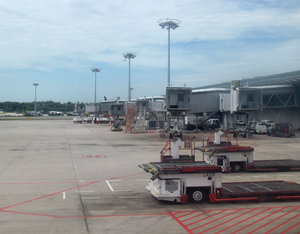
On-the-job accidents, injuries and fatalities at Logan Airport and other large airports nationwide are most commonly experienced among the ground crews and other support personnel.
nFXBIIw.jpg
Our Boston workers’ compensation attorneys understand that an airport like Logan would simply cease to run without these dedicated and hardworking employees. Still, these workers face some of the highest risks for work accidents, injuries and fatalities. Some of these incidents most commonly include transportation accidents, struck by objects and fall accidents.

The General Edward Lawrence Logan International Airport, or Logan Airport, covers close to 2,400 acres, has about 10 runways and employs more than 15,000 people. As of 2010, it was the largest airport in the New England area. It’s the 19th busiest airport in the county and completes close to 14 million boardings a year, helping to transport close to 30 million passengers. That’s a lot of luggage!

Recently, officials with the Occupational Safety and Health Administration (OSHA) announced that it would be renewing its Alliance with the Airline Ground Safety Panel. The purpose of this Alliance is to help to reduce, and ultimately eliminate, the number of accidents, injuries and fatalities occurring in these jobs. There are more than 10 airline companies involved in this alliance, too. There are three unions as well, and close to 400,000 workers. These individuals account for about 90 percent of the industry.

“We look forward to working with the panel to educate and train employers and workers on preventing workplace injuries,” said David Michaels, Assistant Secretary of Labor for Occupational Safety and Health.

The Alliance will continue through a 2-year agreement. During this time, officials with the Alliance will be creating fact sheets that will be used to eliminate the risks of slip, trip and fall accidents and other various hazards that are common while operating ground safety equipment. Officials with the Alliance will also be conducting a number of studies to help to improve the safety of these workers and to help to address hazards and dangers.

Labor Organizations with the Alliance:

-Transport Workers Union of America, AFL-CIO
-Transportation Trades Department, AFL-CIO
-International Association of Machinists and Aerospace Workers.

Also expressing support for the Alliance was Airlines for America.

If you check the National Transportation Safety Board‘s (NTSB) Aviation Accident Reports, you can see that airport and aviation accidents come with some serious risks.

The truth is that this is a dangerous industry for all involved. It’s important that safety is kept as a number one priority.
Continue reading

Hurricane Sandy came at New England full force.

Because of her wrath, airports in the area have canceled close to 20,000 flights. Hurricane Sandy slammed into a cold-weather system and dropped into the area bringing 80 mile per hour winds. Rain and snow even continued in some mountainous areas. More than three dozen people were killed, according to the Boston Globe.
nGbDSvW.jpg
When it all boils down, hurricanes are a kind of tropical cyclone that can do some serious damage to the communities they hit. They are storm systems that come with circulating air and sustained wind speeds of at least 74 miles per hour. Some of the toughest of hurricanes can come with speeds of more than 150 miles per hour. Areas that line the Atlantic Coast face some serious risks.

Our Boston workers’ compensation lawyers understand that the New England area is prone to these kinds of conditions. Hurricane season typically lasts from June through November. It’s important that residents in the area become familiar with the kinds of hurricane warnings we have, the hazards that accompany a hurricane as well as the precautions that both employees and employers should take once a hurricane has passed.

Once a hurricane has come and gone, work conditions change! In the wake of a hurricane, emergency response and recover employees can expect to face some serious challenges. Some of these challenges can include downed power lines, construction debris, downed trees and more.

Before heading out, employers need to look at the hazards and the risks that are involved in tasks that are specific to working in a hurricane-affected area. Once the area has been inspected, engineering controls and workplace practices need to be established.

Hurricane Recovery Safety Tips:

-Use hearing protection when working with chain saws and other loud equipment.

-Make sure all workers are properly trained in the recovery efforts they’ll be completing.

-Isolate unsafe areas with barriers and signage to restrict access.

-Make sure there’s a supply of clean water or disinfecting solutions in order to allow workers to practice personal hygiene.

-Inspect all tools before use to make sure they’re in working order.

-Avoid going near downed power lines, whether you think there’s power or not.

-Be cautious near water. Standing water can hide dangers and moving water can be dangerous for even the best of swimmers.

-Be cautious of insects and wildlife that may come with diseases.

-Air quality in questionable areas should be tested by a qualified individual.

-All debris should be disposed of in an approved manner.

-Extra care should be carried out to help to protect broken skin, like scrapes and cuts, to help to prevent disease transmission.

-Be cautious of moist or humid areas. This is a breeding ground for fungus and mold.
Continue reading

The Occupational Safety and Health Administration (OSHA) is a federal program that works alongside state partners to try to make sure that work places are safe for employees of all kinds.

Still, there were more than 4,600 workers killed at work in 2011. This is despite the more than 2,000 OSHA inspectors that are responsible for making sure these areas are safe. They’re supposed to look over the approximate 130 million workers and close to 10 million work sites in the nation. Their inspection and enforcement might not be as effective as it could be because, when you break it down, each health and safety inspector covers close to 60,000 workers.
businessmen.jpg
OSHA has 10 regional offices in addition to nearly 100 local area offices. They have a budget of nearly $585,000,000. Still, thousands are killed and even more are injured each and every year.

Our Boston workers’ compensation attorneys understand that there were close to 41,000 federal inspections conducted in 2011. This in addition to the more than 52,000 state inspections conducted.

The problem is that this organization isn’t big enough to handle the problems of work sites nationwide. For every 100,000 U.S. workers, there were close to 4 who were killed on the job. You might be thinking that 4 isn’t a lot, but when you take into account that there are 130 million workers in the U.S. and you remember that these are human lives that we’re talking about here, you’ll quickly realize that this is a huge problem.

This means that there are close to 15 fatalities a day, or close to 90 a week, throughout America’s work sites.

It’s also important to point out that these newly-released numbers illustrate an increase from the 2009 numbers.

Close to 750 were Latino or Hispanic workers. Close to 15 Latino workers, or 2 a week, were killed on the job.

“Every day in America, 13 people go to work and never come home. Every year in America, nearly 4 million people suffer a workplace injury from which some may never recover,” said Secretary of Labor Hilda Solis.

The most alarming thing about these incidents is that many of them are completely preventable. American workers are on the job chasing the American dream. We all want to go to work, make a decent living, work to provide for our families and make it home safe at the end of the day. .

The truth of the matter is that employers have to do their job, too. Employers are required to make sure that working conditions are healthy and safe for all workers. American workers rely on it. And the safety of you and I depends on it.
Continue reading

A New England brewery has been cited by officials with the Occupational Safety and Health Administration, (OSHA) which alleges close to 15 seriously violations of its workplace health and safety standards.
The investigation leading to these citations was the result of the late-April death of a worker at the company’s location in Portsmouth. The accident happened when he was using a compressed air line to get rid of the liquid that was inside of the plastic keg. It exploded and hit him — killing him.
1393154_hdr_warehouse.jpg
The inspection was conducted by the Area OSHA Office. It concluded that the explosion was a result of excess air pressure that came from the cleanout line of the keg. The line didn’t have the proper air regulator that would have cut off the air pressure to keep it under 60 PSI. This is the highest amount of air pressure that should be used and is recommended by product manufacturers. As a result of the recent inspection, officials discovered that workers who were designated to clean the lines were exposed to the exact same kinds of dangers while cleaning out the steel kegs.

Our Boston workers’ compensation attorneys understand that it is critically important that all machinery is used properly on the job. An employer is required to make sure that they know the limitations of all devices and machinery on the job and that employees are properly trained to know this kind of information as well. Because this didn’t happen, the New England brewery was cited for exposing workers to struck-by dangers and also for exceeding the limitation set forth by the manufacturers of the machinery.

“The inability to regulate air pressure when cleaning out kegs exposed employees to a recognized hazard of being struck by debris should the kegs explode due to being overpressurized,” OSHA’s Area Director Rosemarie Ohar said.

Also discovered in the inspection were a number of dangers that were related to confined work spaces, procedures that were incomplete for making sure that machine’s power sources were properly locked out before starting maintenance work on them, for not properly guarding machinery, for not properly storing acetylene and oxygen tanks and for not letting its workers know of specific chromium hazards. Altogether, there were 13 serious violations cited for these various dangers.

With these citations come fines that total close to $65,000. The company has been allotted 15 business days to either pay the penalties, to contest, to comply with the findings and/or meet with a local area director with OSHA.

It’s important that employees take the proper safety precautions when using heavy machinery. Proper safety equipment should be used by all workers in the area. Machinery needs to also be protected. Never should a worker run the risk of injuring themselves when working on heavy machinery properly.
Continue reading

Contact Information